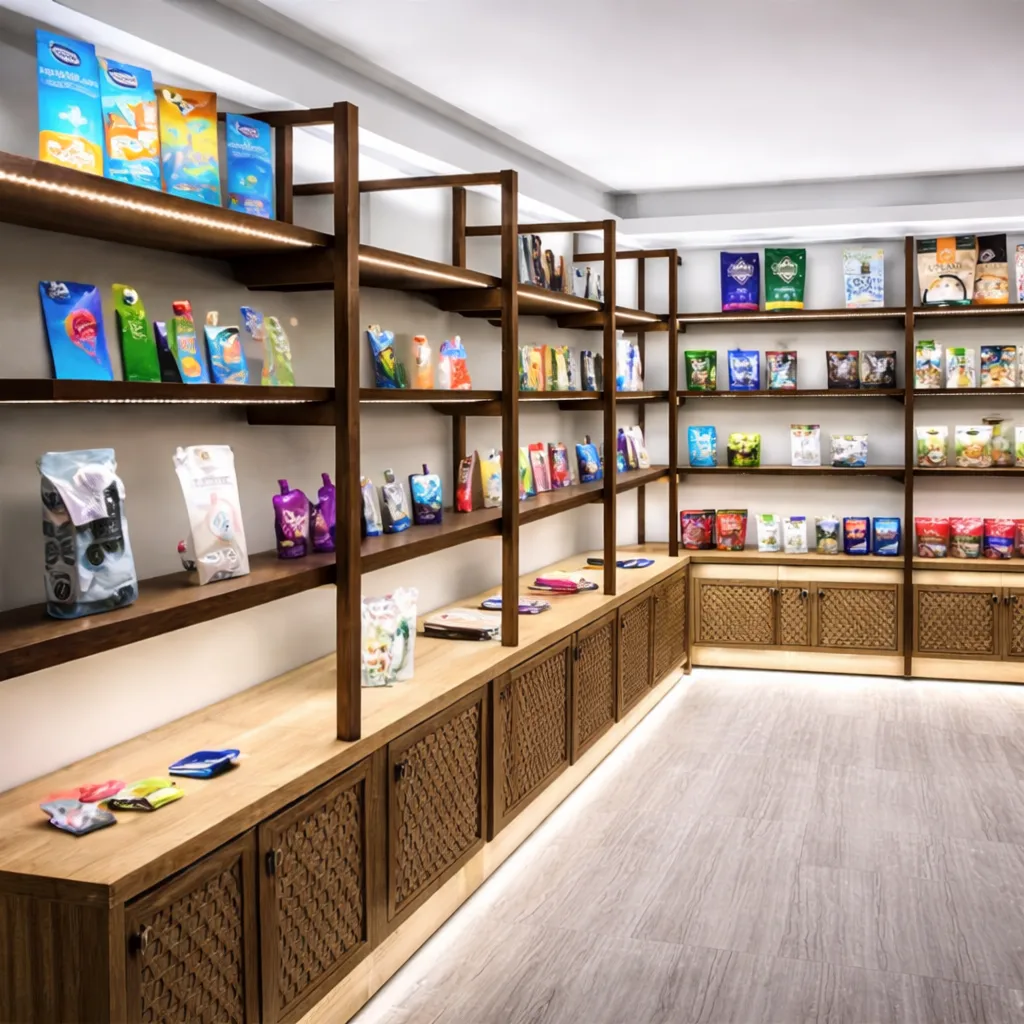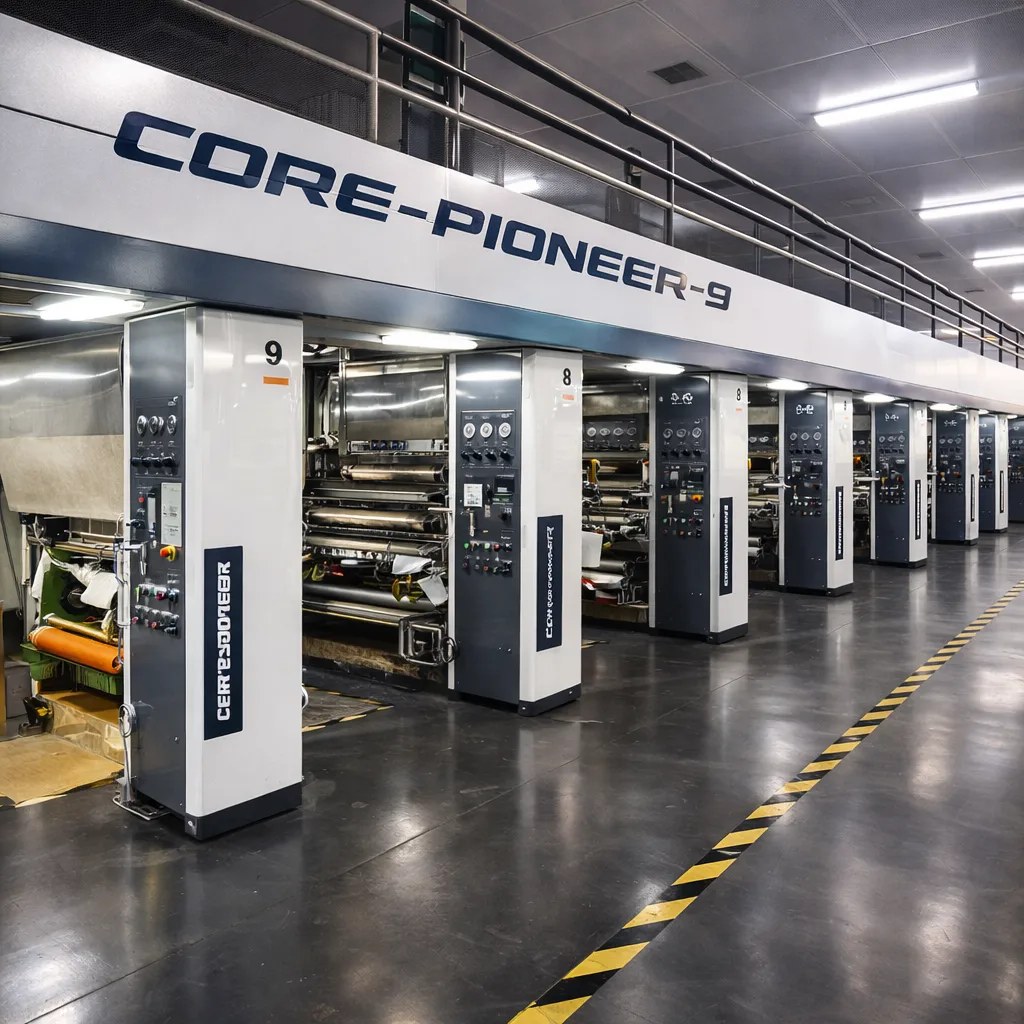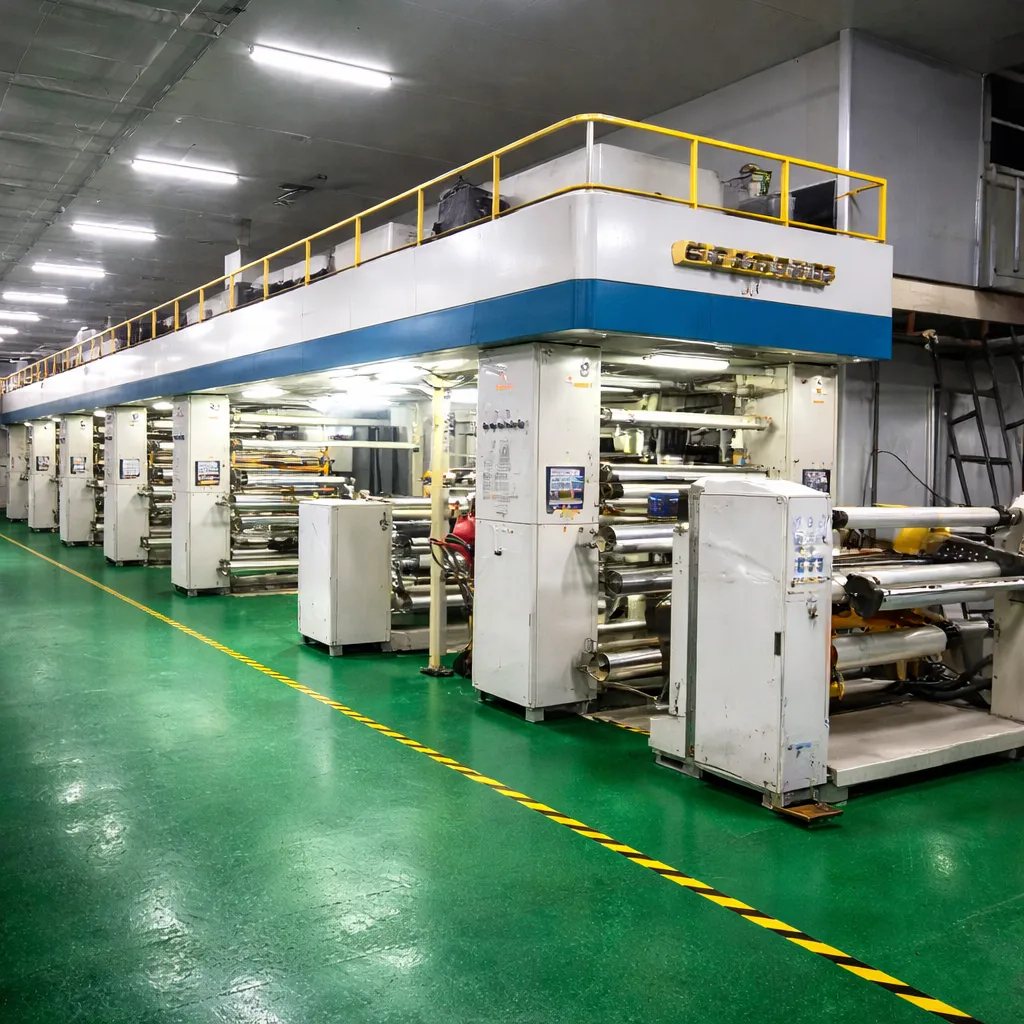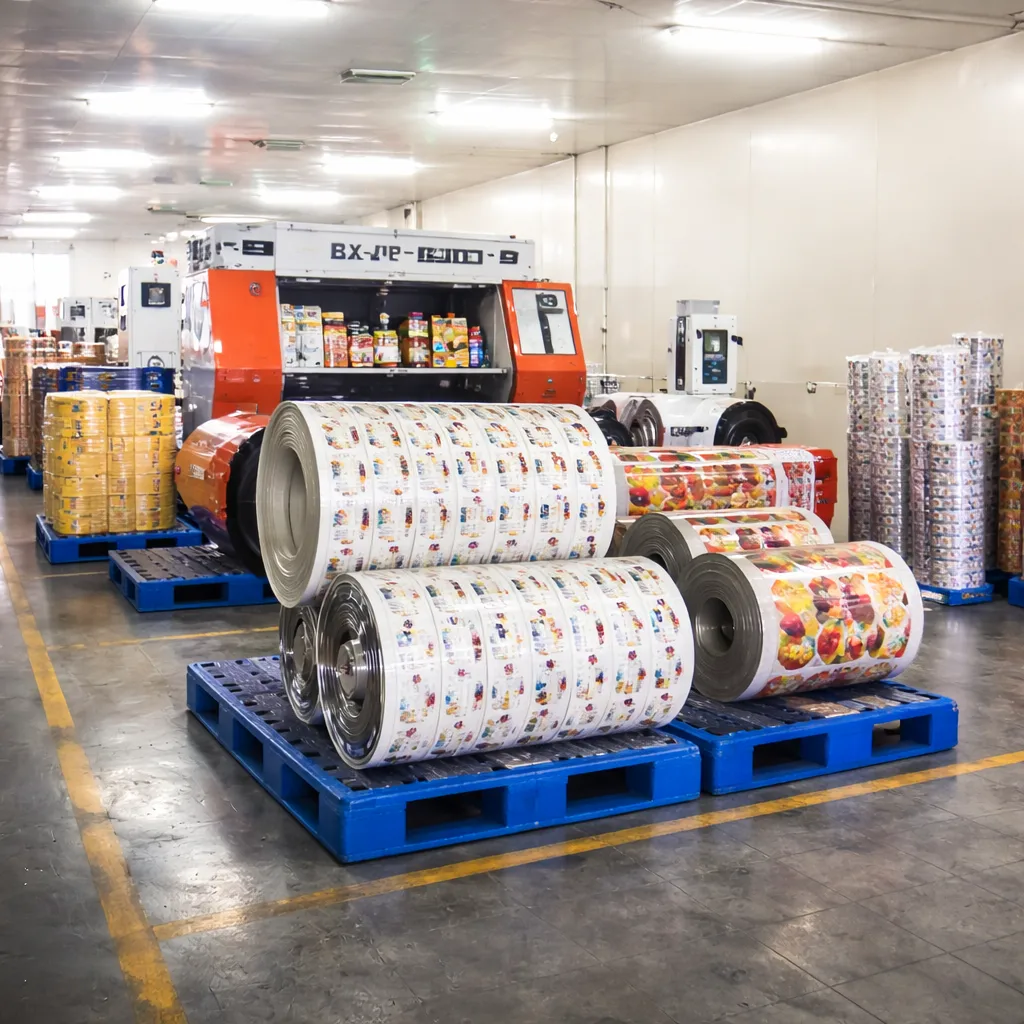


Packagly prints and ships small-run packaging for brands across the USA, and our team sees the same request every week: make it look good, keep it green and keep it affordable. Custom Kraft Pillow Boxes answer all three. They fold from one sheet, they carry your logo well, and they recycle with paper in most areas. Why do so many young brands start here?
The answer is mostly about contrast. A brown box lets your ink, stamp or sticker do the talking, and buyers read that simplicity as honest. Add one smart detail, such as a foil logo or a printed thank-you note, and the box feels personal.
This guide shows how to choose styles, print options and finishes, what the work costs, and how to pick a supplier. We use plain language and real numbers. By the end, you can brief a printer with confidence. Let’s begin with why the format works so well for small products.
Why personalized branding works on brown paper
Shoppers rarely read a label before they judge a product. What does your box say about you before anyone opens it? People look at the box, feel the paper and decide quickly whether the product seems cared for.
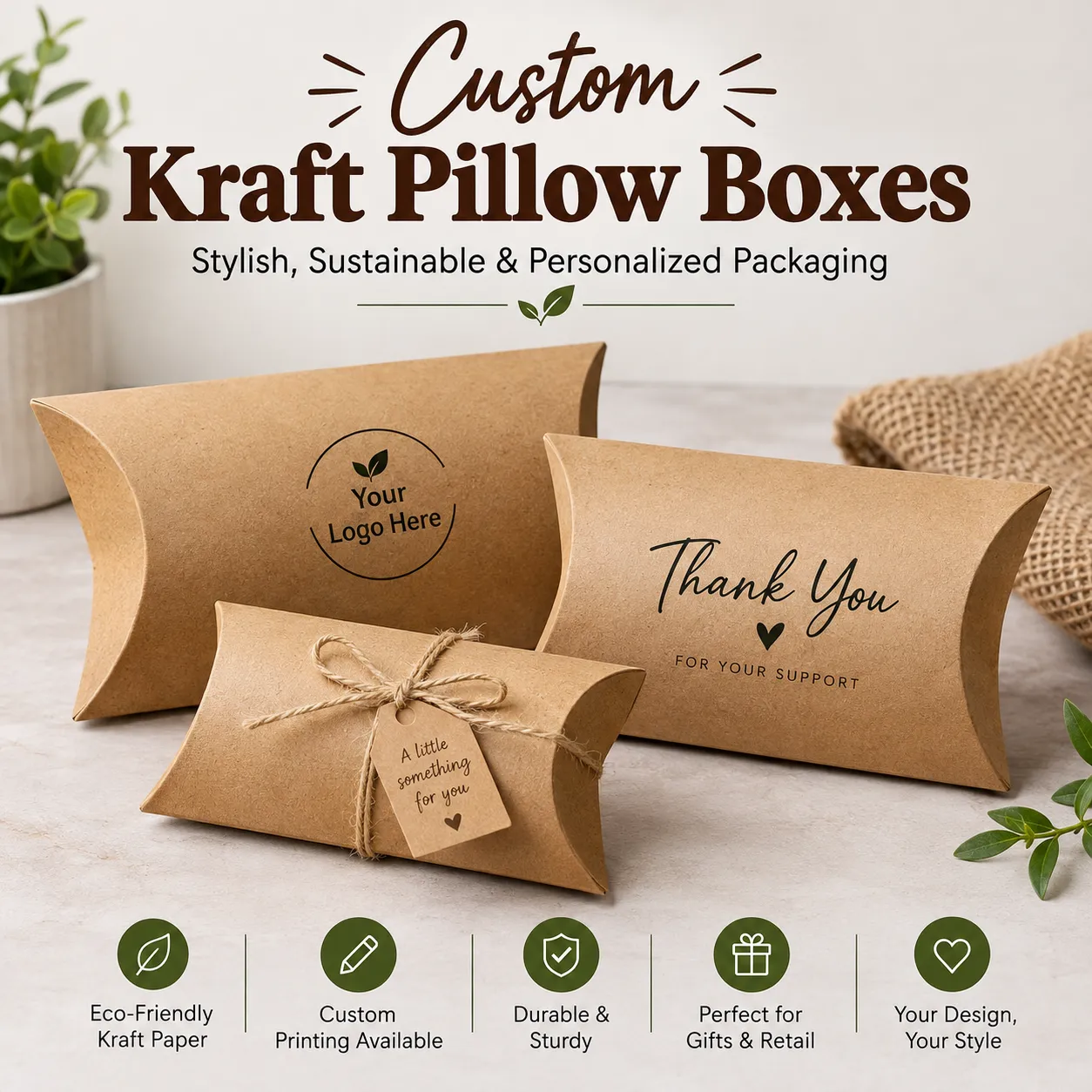
A pillow box is a simple fold-up carton, and that simplicity is its strength. The curved ends tuck into each other, so you skip glue and ship the boxes flat. Brands in food, beauty, jewelry and gifting use them, and many custom kraft pillow boxes now carry a window, a belly band or a hand-stamped logo.
Each trade uses the shape a little differently. Bakeries pack cookies and macarons behind a window. Candle and soap makers wrap a bar or a votive and seal it with a sticker. Jewelers slip a pendant inside, and subscription brands tuck a sample sachet into a belly band.
Green claims need numbers behind them. According to the U.S. Environmental Protection Agency (2018), paper and paperboard had a 68.2 percent recycling rate, the highest of any material in municipal solid waste. Corrugated boxes reached 96.5 percent, but other paper packaging reached only 20.8 percent. Folding cartons such as pillow boxes sit in that second group, so a printed flatten-and-recycle note really helps.
Keep your wording honest. The Federal Trade Commission’s Green Guides (16 CFR Part 260) cover how you can use words like recyclable and recycled content on a pack. If you sell in the UK, Canada or Australia, check each country’s green-claim rules too.
Print methods, finishes and add-ons compared
Personalizing a brown box means working with the color, not against it. Kraft is darker than white board, so light inks look muted and dark inks look rich. For custom kraft pillow boxes, black, navy, forest green and deep red print cleanly on the natural face. White ink gives a bright accent but costs more.
Digital printing suits short runs and many design versions, such as one box per scent or flavor. Offset printing costs more to set up but gives sharper color on longer runs. Ask for soy- or water-based inks to keep the box easy to recycle.
Finishes add texture. A matte or gloss aqueous coat protects the print from scuffs. Spot UV makes a logo shine against the matte brown, foil adds a metallic accent, and embossing raises the shape you want people to touch. Use one or two, not all of them, or the box loses its natural look.
Small add-ons stretch the budget further than extra print. A printed belly band, a rubber-stamped sticker or a tissue insert in your brand color turns a plain box into a gift. Personalized kraft pillow boxes with logo and a clear window also show off bakery and soap products without extra ink.
Check food-contact needs early. Cookies and tea need board with the right documentation, and a coating that looks harmless can still block recycling if it is plastic-based.
Added costs below are typical ranges for runs near 1,000 boxes. Your quote will vary with size and artwork.
|
Option |
Added cost per box |
Look and feel |
Best for |
Recycling impact |
|
One-color ink on natural kraft |
Base price |
Rustic, bold |
Soap, tea, bakery |
Minimal |
|
Full-color on white kraft |
$0.10 to $0.30 |
Bright, detailed |
Cosmetics, gifts |
Minimal |
|
Aqueous coating |
$0.02 to $0.06 |
Smooth, scuff-resistant |
Shipped boxes |
Low |
|
Spot UV |
$0.08 to $0.25 |
Glossy logo accent |
Premium gifts |
Check with mill |
|
Foil stamping |
$0.10 to $0.35 |
Metallic shine |
Jewelry, candles |
Small areas usually fine |
|
Embossing |
$0.08 to $0.20 |
Raised texture |
Luxury feel |
None |
From artwork to doorstep: production and pricing
Most first-time buyers worry about the process more than the price. What actually happens between your logo file and the delivery truck?
How the process works
Here is the sequence, with what you do and what the plant does.
- Brief: You send the product size, quantity and logo. The team replies with a quote and a dieline, which is the flat template for your box.
- Proof: You place your artwork on the dieline and approve a digital proof.
- Printing: The press prints your colors on kraft, and the plant applies any coating you picked.
- Cutting: A steel die cuts and creases each sheet, and a worker patches windows if you ordered them.
- Checking: Staff pull sample boxes from the run to test folds, color and cuts.
- Shipping: The boxes ship flat, which cuts freight cost.
Companies like Packagly, a Chicago packaging maker that ships free across the USA, quote about 6 to 8 working days for typical orders and give free design help on artwork. Rush jobs and complex finishes can add time.
What sets the price
Five things drive the cost: box size, board type, number of print colors, finish and quantity. Quantity has the biggest pull, because setup costs spread over every unit. Personalization adds smaller amounts, as the table above shows.
Say a small candle brand orders 2,000 natural kraft boxes with a one-color logo and a matte coat. At roughly $0.40 each, the run costs about $800. A foil logo might lift the price to $0.60 per box, or $1,200 in total.
Is that worth it? A $1 rise in shelf price covers the extra $400 five times over once the batch sells, so run the sum for your own product.
Shipping and location matter too. Brands in the Midwest often search for kraft pillow boxes in Chicago to cut transit time, and a flat-packed pallet costs less to move than rigid boxes. Ask whether freight sits inside the quote.
Choosing a supplier for wholesale orders in the USA
A pretty mock-up means little if the real boxes arrive late or off-color.
How can you judge a supplier before you pay? Six checks help:
- Ask for a printed sample on real kraft, not a white mock-up.
- Check the minimum order, since low minimums protect your cash.
- Request the board’s weight, recycled content and certification, such as FSC.
- Get food-contact paperwork for edible products.
- Confirm who handles artwork fixes and how many proofs you get.
- Ask whether freight and tooling sit inside the quote.
One print production manager in Illinois would add a tip: approve color on the real stock. Screens show bright, clean colors, but brown paper mutes them, so a press proof saves reprints.
A packaging specialist such as Packagly, which runs its own factory, lists low minimum orders and offers free design help, works differently from a general print shop. A generalist or online reseller may pass your file to a third-party plant, and that adds days and a markup.
Compare two quotes line by line. Does each one use the same board, print method and finish? A cheaper quote often drops one of the three.
Selling in the UK, Canada, Australia or New Zealand? Ask about duties, delivery times and metric dieline sizes up front. A supplier used to export orders will answer in one email.
Frequently asked questions
What are custom kraft pillow boxes used for?
They hold light, small products such as cookies, soap, candles, tea, jewelry, cosmetic samples and gift cards. The fold-up shape protects items in transit and ships flat before use, which saves storage space. Kraft paper gives the box a natural, handmade look that suits eco-minded brands.
How much do personalized kraft pillow boxes with logo cost in the USA?
A plain one-color run of about 1,000 boxes often costs $0.35 to $0.90 each. Full-color print, spot UV or foil can add $0.10 to $0.35. Larger orders lower the unit price, so ask for quotes at two or three quantities.
Is there a low minimum order for custom pillow boxes?
Many specialists accept small runs, and some set no strict minimum. Digital printing helps short runs because it skips costly press plates. Ask each supplier for its minimum in writing, and compare the price per box at 500, 1,000 and 2,500 units.
Can I print my logo on kraft paper in bright colors?
Bright colors look muted on brown kraft. Dark inks and white ink look best, and a white-lined kraft board gives true color if you need bright artwork. Ask for a press proof on your chosen stock before you approve the full run.
Are kraft pillow boxes recyclable?
Most uncoated or aqueous-coated kraft boxes go into household paper recycling. Plastic lamination and large foil areas can cause trouble at the mill. Print a short flatten-and-recycle note on the box, and check local rules, because programs differ by city and country.
Do kraft pillow boxes need to meet food or labeling rules?
Yes, for some uses. Boxes that touch food need paper that meets U.S. Food and Drug Administration food-contact rules under 21 CFR 176.170. Green claims such as recyclable fall under the Federal Trade Commission’s Green Guides. Ask your supplier for written documentation.
Will kraft pillow boxes survive humid weather in places like Florida or Queensland?
Kraft absorbs moisture, so boxes can curl in damp air. Store cartons flat in a dry room, off the floor. For humid or coastal shipping, choose thicker board and an aqueous coat, and keep the boxes in sealed outer cartons until use.
How long does delivery take for kraft pillow boxes across the USA?
Production typically takes 6 to 8 working days, plus transit. Complex finishes, large runs and extra proof rounds add time. Order at least four to five weeks before a launch or holiday rush, so you have a buffer for changes.
Can I add a window or insert to kraft pillow boxes?
Yes. Suppliers cut a window and patch it with clear film, or you can add a tissue wrap, sticker or belly band for extra personality. Windows work for cookies and soap, but film adds another material, so ask about recyclable or cellulose options.
Where can I order kraft pillow boxes in Chicago or across the USA?
Look for a supplier that prints and cuts in its own factory, shows low minimums and offers free design help. Chicago makers can shorten transit for Midwest brands, and some suppliers ship nationwide with free freight. Ask for a sample before you commit.