

A plain box can sell like a premium gift with one printed paper strip. Brands such as Packagly help small and mid-sized businesses turn that strip into a real marketing tool, and we wrote this guide to show how. Here are the belly band packaging ideas that work, with the steps, costs and checks behind them.
Shoppers notice the details. According to the Paper and Packaging Board and Ipsos (2018), 72% of Americans say packaging design often influences what they buy. A band costs only cents per unit, yet it gives you space for a logo, a short claim and a scannable code.
We cover styles, materials, the ordering process, cost drivers and the questions to ask any supplier. Which idea will make your product the one shoppers pick up first?
Why a simple paper strip changes how shoppers see your product
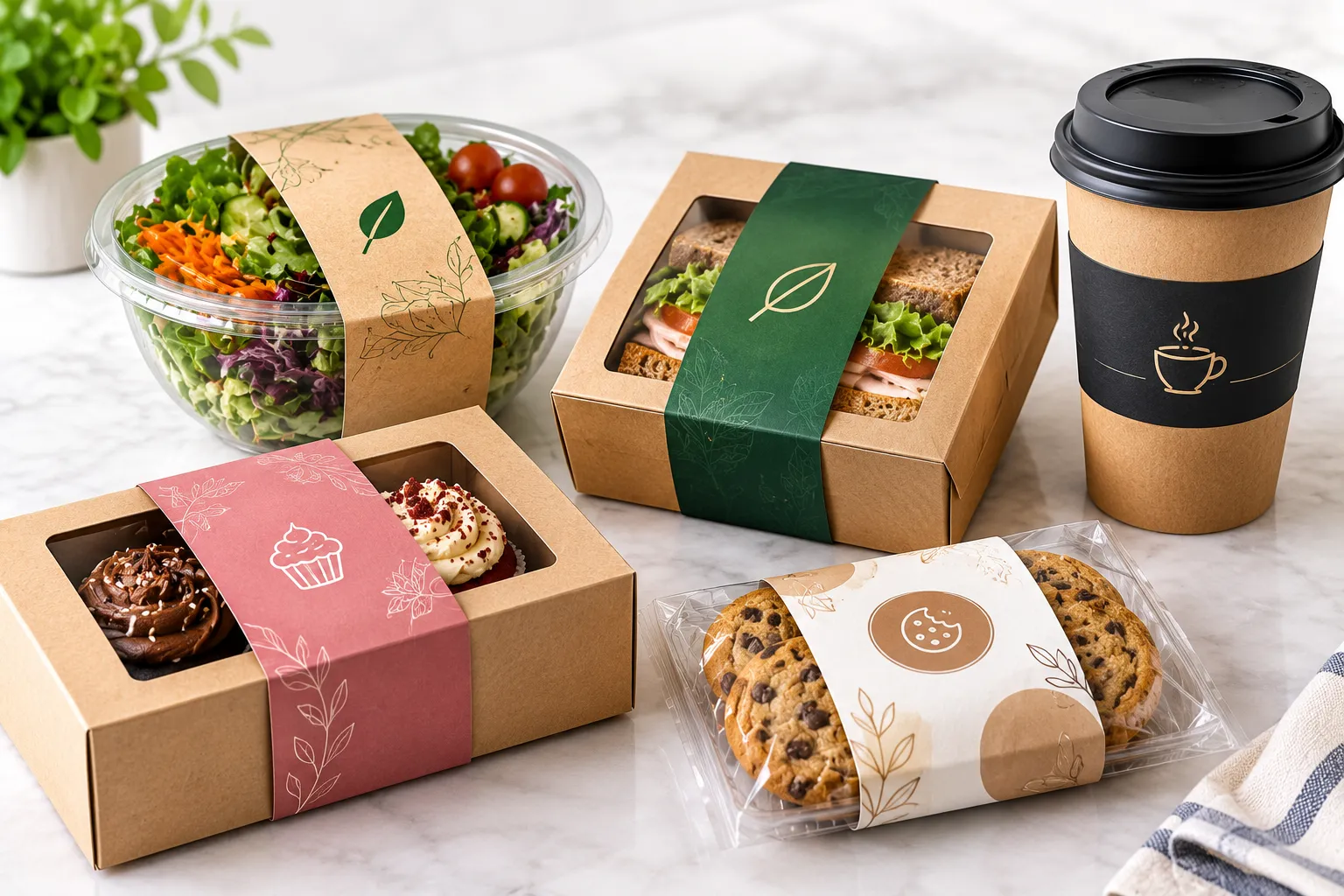
Walk down any shelf of soap, candles, chocolate or socks and you will spot a thin strip wrapped around the middle of the pack. That strip is a belly band, sometimes called a product sleeve or wrap. It holds items together and carries your brand message.
Brands choose belly band packaging for three reasons: low cost, fast changes and easy recycling. You can print a new band for each season without redesigning the whole box. Paper bands also slide off in seconds, which suits household recycling.
According to the Paper and Packaging Board and Ipsos (2018), 63% of Americans say paper and cardboard packaging makes a product seem premium or high quality. A kraft band on a plain jar can lift perceived value without a new container. Gift sellers, soap makers and coffee roasters rely on this every day.
Take a candle maker selling at weekend markets. Her clear glass jars all looked the same on the table. A matte black band with each scent name in gold foil let customers tell the scents apart at a glance, and the band cost about 30 cents at a run of 2,000.
Sleeve styles and materials compared
Choosing a style starts with the product. A band that suits a bar of soap may crush a delicate pastry box. The five options below cover most small business needs.
Kraft paper bands give an earthy, handmade look and suit soap, tea and candles. Coated art paper shows sharp colour and suits cosmetics and confectionery. Textured or cotton-blend stocks feel luxurious in the hand, though they cost more. Which feel matches your brand?
Finishes change the story too. Foil stamping and spot UV add shine to a logo. Soft-touch lamination gives a velvety feel. Die-cut windows let shoppers see the product, and tear-off perforated bands double as tamper evidence.
Prices below are typical estimates per band for runs of 1,000 to 5,000 in 2026. They vary by size, supplier and country.
|
Style |
Approx. cost per band |
Look and feel |
Best for |
Trade-off |
|
Kraft paper |
0.08–0.20 |
Earthy, natural |
Soap, tea, candles |
Limited colour range |
|
Coated art paper |
0.10–0.30 |
Bright, matte or gloss |
Cosmetics, snacks |
Less eco look |
|
Foil or spot UV |
0.25–0.60 |
Premium shine |
Gift sets, chocolates |
Higher setup cost |
|
Textured or cotton stock |
0.30–0.80 |
Soft, luxury |
Boutique gifting |
Costly at small runs |
|
Die-cut or tear-off |
0.20–0.50 |
Functional, interactive |
Food, tamper evidence |
Needs a custom die |
How a custom order works, step by step
Ordering feels easier once you see the order of work. A good supplier handles these steps with you:
- Share the product size, pack style and target run.
- Pick the paper stock and finish.
- Receive a die-line template and place your artwork on it.
- Approve a digital proof, plus a printed sample for larger runs.
- Wait for production, usually 10 to 15 working days after approval.
- Receive delivery, ready to wrap by hand or with a banding machine.
Hand wrapping works for small runs. At 10,000 pieces or more, a banding machine saves hours. Specialist suppliers like Packagly focus on custom packaging for growing brands, so they can check your die-line, suggest a stock and flag print issues before production starts.
Rules matter here. In the UK, Extended Producer Responsibility for packaging requires businesses to report the packaging they supply and pay fees on it. In the US, the Federal Trade Commission’s Green Guides govern recyclable claims. Never call a band recyclable unless the whole piece, including ink and coating, can go in the paper stream. According to the Foodservice Packaging Institute (2025), 73% of US consumers expect brands to say more about recyclability.
What affects the price
Five things drive cost: run size, paper stock, finish, band size and number of ink colours. Run size matters most because setup costs spread across more units. A 500-piece run might cost $0.40 per band, and 5,000 pieces might fall to $0.12. Foil and custom dies add one-off tooling fees, often $50 to $150.
Ask for a quote at three quantities. Compare unit price, tooling, sampling and shipping side by side. Does a cheaper quote hide extra fees? Overseas freight can add a noticeable amount to small orders.
Picking a packaging partner that fits your run size
Run size should guide your choice. Online print marketplaces suit tests of 100 to 500 bands. Specialist packaging makers suit runs of 1,000 or more and brand-sensitive colour work.
Ask any belly band packaging supplier for a printed sample on your chosen stock. Check the colour against your brand swatch, the fold lines and the paper weight, usually 120 to 300 gsm. Confirm minimum order quantities and turnaround in writing.
A packaging designer who works with small food brands told us the most common mistake is a band cut a few millimetres too loose. It slips off in transit. A snug fit with a small glued overlap at the back fixes that.
A specialist packaging maker, such as Packagly, will typically supply die-line templates, stock advice and structural samples that a general print shop or national office chain may not. That saves you a costly reprint. It also shortens the gap between your first idea and a finished pack.
Frequently asked questions
What is belly band packaging used for?
It wraps a thin printed strip around a product or box. The strip adds branding, ingredients, barcodes or promotions without a full custom carton. Soap, candles, chocolate, socks, books and gift sets all use bands to look finished and sell better.
How much do custom belly bands cost?
Most paper bands cost between $0.08 and $0.80 each at runs of 1,000 to 5,000. Kraft is the cheapest. Foil, textured stock and custom dies raise the price. Tooling fees of $50 to $150 may apply for special cuts.
Does a small order cost more per belly band?
Yes. Setup costs spread across fewer units, so a 500-piece run can cost three times more per band than a 5,000-piece run. Ask suppliers for quotes at several quantities and check for mixed-design runs.
Which paper stock works for belly bands?
Kraft paper suits a natural look. Coated paper of 250 to 300 gsm gives sharp colour for cosmetics and food. Lighter stock of 120 to 150 gsm suits wide, lightweight bands on soap. Request a sample before you order.
Do belly bands need to follow packaging regulations?
Often yes. UK businesses may fall under packaging Extended Producer Responsibility rules, and US sellers must follow the FTC Green Guides for recyclable claims. If the band carries ingredients, allergens or weight, check labelling rules for your product category.
Where can I order custom belly band packaging in the UK?
Choose between UK print marketplaces for short runs and specialist packaging makers for larger ones. Local production often shortens lead times and avoids customs paperwork. Ask for delivery dates in writing and approve a sample before you commit.
Which belly band ideas suit small businesses on a tight budget?
Try single-colour kraft bands with a stamped logo, seasonal swap bands on the same box, or a QR code that links to reorders. These cut print costs and let you refresh your look often.
How long does custom production take in the US or Canada?
Plan for 10 to 15 working days after proof approval, plus two to seven days of domestic shipping. Foil work and custom dies can add a few days. Order four to six weeks ahead of a launch or holiday season.
Do belly bands hold up in humid or hot climates?
Paper can curl in high humidity and fade in direct sun. Choose coated or lightly laminated stock for humid markets, and use light-fast inks for window displays. Store bands flat in a dry room before wrapping.
How do I size a belly band correctly?
Measure the widest girth of the pack and add 10 to 15 mm for the overlap. Make the band one quarter to one third of the pack height. Test a printed sample on a real product before the full run.
Your next step is small. Measure your pack, pick a stock and write a one-line message for the band. Then request quotes at three quantities and ask for a printed sample. If you want help choosing a style or checking your artwork, reach out to Packagly for a free quote and compare it with the others. A good band should look right in your hand before it looks right on screen