

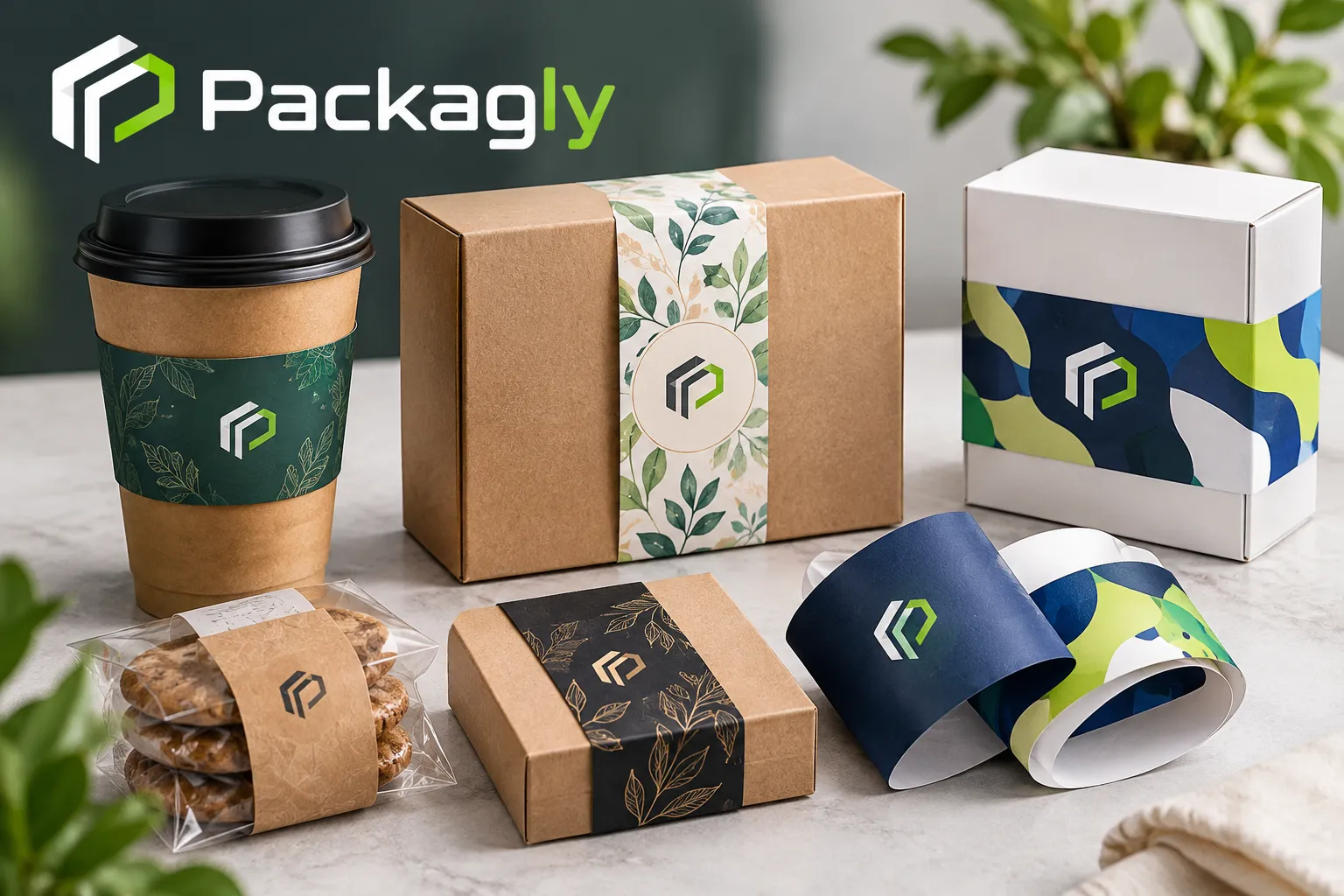
A plain box can sell as well as a fancy one if the first impression is right. At Packagly, we see small brands win shelf attention with one thin strip of paper. Printed belly bands wrap around soap, candles, cookies, and gift sets and give each product a clear face. They cost less than a full carton and work with the packaging you already own.
Why do so many modern brands switch to this format? A band carries your logo, a short story, and legal details in one tidy strip. You can change the design each season without redoing the whole pack. It cuts waste too, which buyers now notice.
This guide covers materials, finishes, ordering steps, costs, and supplier checks. Whether you sell from a market stall or a warehouse, you will leave with a clear plan.
Why packaging belly bands suit modern brands
Think of a belly band as a label that doubles as a design feature. It is a strip of printed paper or card that wraps around the middle of a box, bottle, bundle, or bar. Because it sits on top of existing packaging, you pay for the strip, not a whole new carton.
Brands pick packaging belly bands for three main reasons. They are cheap to print in small runs. They let you refresh a look without changing the box. They give you room for a barcode, an ingredient list, or a short brand story.
Is this only for gift products? Not at all. Cheese makers, coffee roasters, stationery brands, and skincare startups all use bands. One packaging designer who works with small food brands describes a band as the cheapest way to test a new look before a full redesign.
Legal rules still apply to a band. If it carries net weight or allergen details on food, the U.S. Food and Drug Administration labeling rules in 21 CFR Part 101 cover that text. If you print “recyclable” on it, the Federal Trade Commission’s Green Guides (16 CFR Part 260) expect you to back up the claim. Check your own market’s food and environmental claim rules before printing.
Materials, finishes, and styles compared
Paper choice shapes how your band looks, feels, and ships. Kraft paper gives a natural, earthy look and suits custom printed belly bands for soap, tea, and candles. Coated art paper holds bright color and sharp photos, which helps cosmetics and confectionery. Recycled paperboard feels sturdy and suits heavier bundles. Clear polypropylene film resists moisture but is harder to recycle.
Finishes change the mood. Matte lamination feels calm and modern. Spot UV adds shine to a logo or pattern. Foil stamping adds metallic accents, and embossing raises text you can feel with a fingertip. Soft-touch coating gives a velvet surface, though it adds cost.
Style matters as well. A full wrap glues at the back and hides the join. A loop band slides on and off, so buyers can reuse the box. A tear-away band shows if a pack has been opened.
Eco friendly belly band packaging is easier than most brands expect. According to the U.S. Environmental Protection Agency (2018), paper and paperboard made up about 23 percent of municipal solid waste in the United States, yet nearly 68 percent was recycled. Paper bands fit that system well, as long as you skip heavy plastic coatings.
|
Material |
Typical cost per band |
Look and feel |
Best for |
Eco profile |
|
Kraft paper |
0.05–0.20 |
Natural, matte |
Soap, tea, candles |
Recyclable, compostable options |
|
Coated art paper |
0.08–0.25 |
Bright, smooth |
Cosmetics, sweets |
Recyclable if uncoated or water-based |
|
Recycled paperboard |
0.15–0.40 |
Sturdy, textured |
Bundles, gift sets |
High recycled content |
|
Polypropylene film |
0.10–0.30 |
Clear, glossy |
Damp or cold items |
Harder to recycle |
How custom bands get designed and made
Every good band starts with a tape measure, not a design file. You measure the box at its widest point and add a small overlap for glue, usually 10 to 15 mm. Then the work moves through six steps:
- Pick the material, finish, and band style.
- Request a dieline template from your supplier.
- Place artwork inside the template, with 3 mm of bleed past the cut edge.
- Review a digital proof for color, spelling, and barcode position.
- Print, cut, and finish the run.
- Wrap the bands by hand or machine and check the fit.
Color deserves attention. Ask for CMYK files for photos and Pantone spot inks for logo colors that must match everywhere. A pale yellow on screen can print dull on kraft, so request a printed sample when color is critical.
Companies like Packagly that focus on custom bands and sleeves usually supply the dieline and a proof before any press run starts. That saves you from the classic mistake of a band that sits half a centimetre too loose. A sample strip on your real box takes a day and avoids a whole reprint.
Pricing, order size, and choosing a supplier
Price depends on three things you control: size, material, and quantity. A small band in kraft paper at 5,000 units can cost as little as $0.05 each. Foil, embossing, and soft-touch coating can double that. Short runs of 250 to 500 cost more per piece, so low minimum order belly bands suit tests and launches.
Take a candle brand shipping 2,000 boxes a month. It can print one plain band for the core range and a limited festive band for each holiday. The festive run costs a few hundred dollars, and the box never changes. That is how belly bands for small businesses stretch a budget.
How do you pick a supplier? Start by asking for samples on your actual material. A supplier that works mainly on bands and sleeves, like Packagly, will already know glue overlap, paper grain that prevents curling, and bleed settings. A general print shop may treat a band as a side job. Before you order, ask these five questions:
- What is your minimum order, and does it change by material?
- Do you provide a dieline and a free digital proof?
- Can you send a printed sample before the full run?
- How long does production take, and what does rush work cost?
- Which paper stocks carry recycled or forest certification?
Clear answers to these usually separate a dependable partner from a quick sale.
Common questions about belly bands
What are printed belly bands used for?
Printed belly bands wrap around the middle of a box, bottle, or bundle. They carry branding, product details, barcodes, and promotions. Brands use them for soap, candles, food, gift sets, and bundled goods because the strip adds a custom look without a full new package.
How much do printed belly bands cost per unit in the US?
Most paper bands cost between $0.05 and $0.40 each in the US, depending on size, stock, and finish. Kraft sits at the low end. Foil, embossing, and thick paperboard raise the price. Larger orders drop the unit cost sharply.
What is the minimum order for packaging belly bands in the UK?
Minimums vary by supplier and print method. Digital printing can start near 100 to 250 bands, while offset printing often begins at 1,000 or more. If you sell in the UK, ask about short runs first, since they let you test designs cheaply.
Are belly bands eco friendly?
Paper bands are among the lighter packaging choices. Kraft and recycled paperboard recycle in most household paper streams. Avoid plastic lamination and heavy foil if recyclability matters. Water-based inks and certified paper, such as FSC stock, strengthen the claim.
Do labelling rules apply to bands in Canada or the US?
Yes, if the band carries required information such as net weight, ingredients, or allergens. Food products follow FDA rules in the US and Canadian Food Inspection Agency rules in Canada. Environmental claims must also be accurate, so confirm local guidance before printing.
What size should my belly band be?
Measure the widest point of your box and add 10 to 15 mm for the glued overlap. Band height usually runs 20 to 60 mm, depending on the pack. Test a paper strip on the real box first, because a loose band looks careless.
Which material lasts best in humid or hot climates like Australia or South Africa?
Coated paper and polypropylene film resist moisture better than plain kraft. Humidity can curl uncoated paper, and heat can soften some glues. Ask your supplier about moisture-resistant stock and test samples in your storage conditions before ordering a full run.
Can a belly band replace a full label or box?
Sometimes. A band can replace a front label on simple products like soap bars or wrapped bundles. It cannot replace a box when you need protection. Most brands pair it with plain kraft or white packaging to keep costs low.
How long does custom belly band production take?
Digital runs often finish in 5 to 10 working days after proof approval. Offset printing and special finishes can take two to four weeks. Add shipping time, especially for international orders, and request a rush quote if you have a launch date.
What file format do printers need for artwork?
Most printers want a vector PDF or Adobe Illustrator file built on their dieline. Use CMYK color, keep text outlined, and add 3 mm of bleed. Place barcodes inside the safe area so they do not wrap around a fold.
Your next step is simple. Measure your box, pick a material that fits your brand and budget, and order a sample before a full run. Then test the band on a few real products and see how customers respond. If you want a hand with sizing or paper options, reach out to Packagly for a quote and ask about low minimums for your first batch. A small test now saves you a costly reprint later