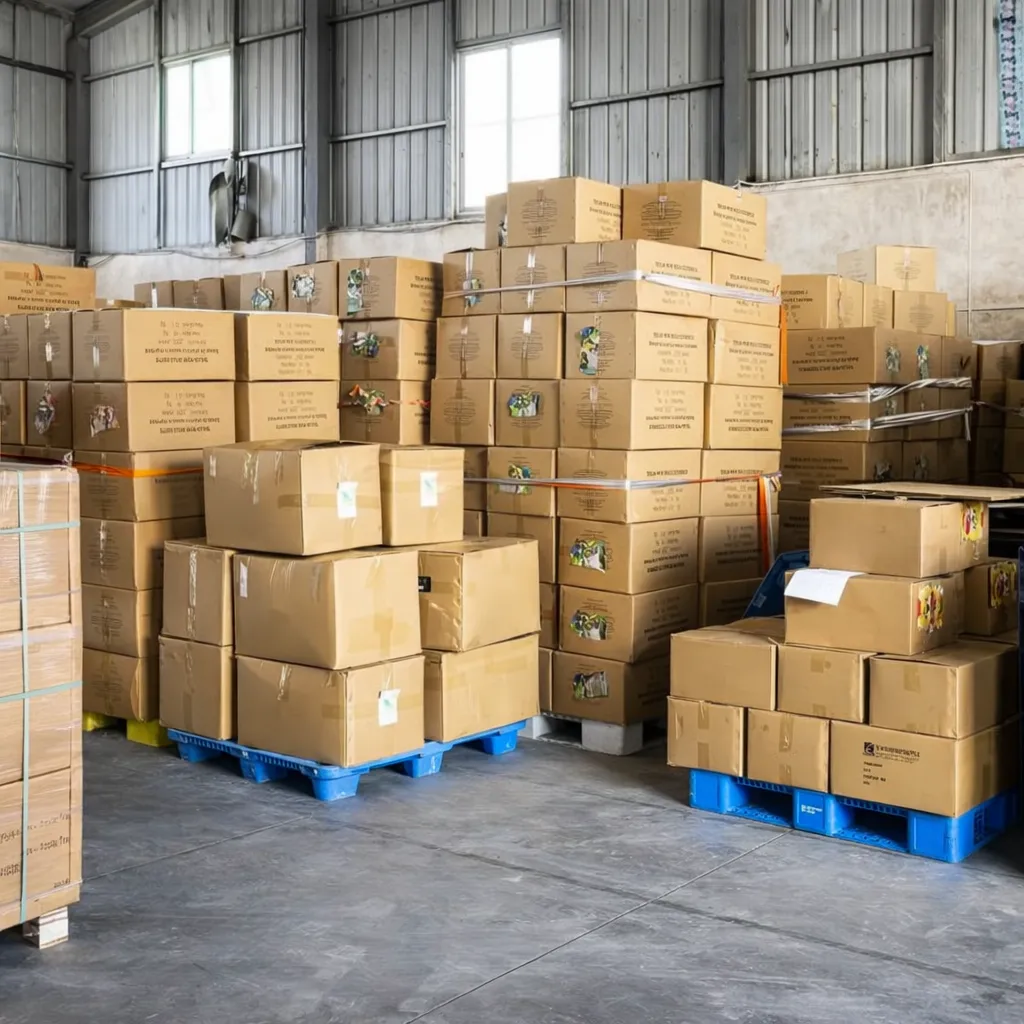


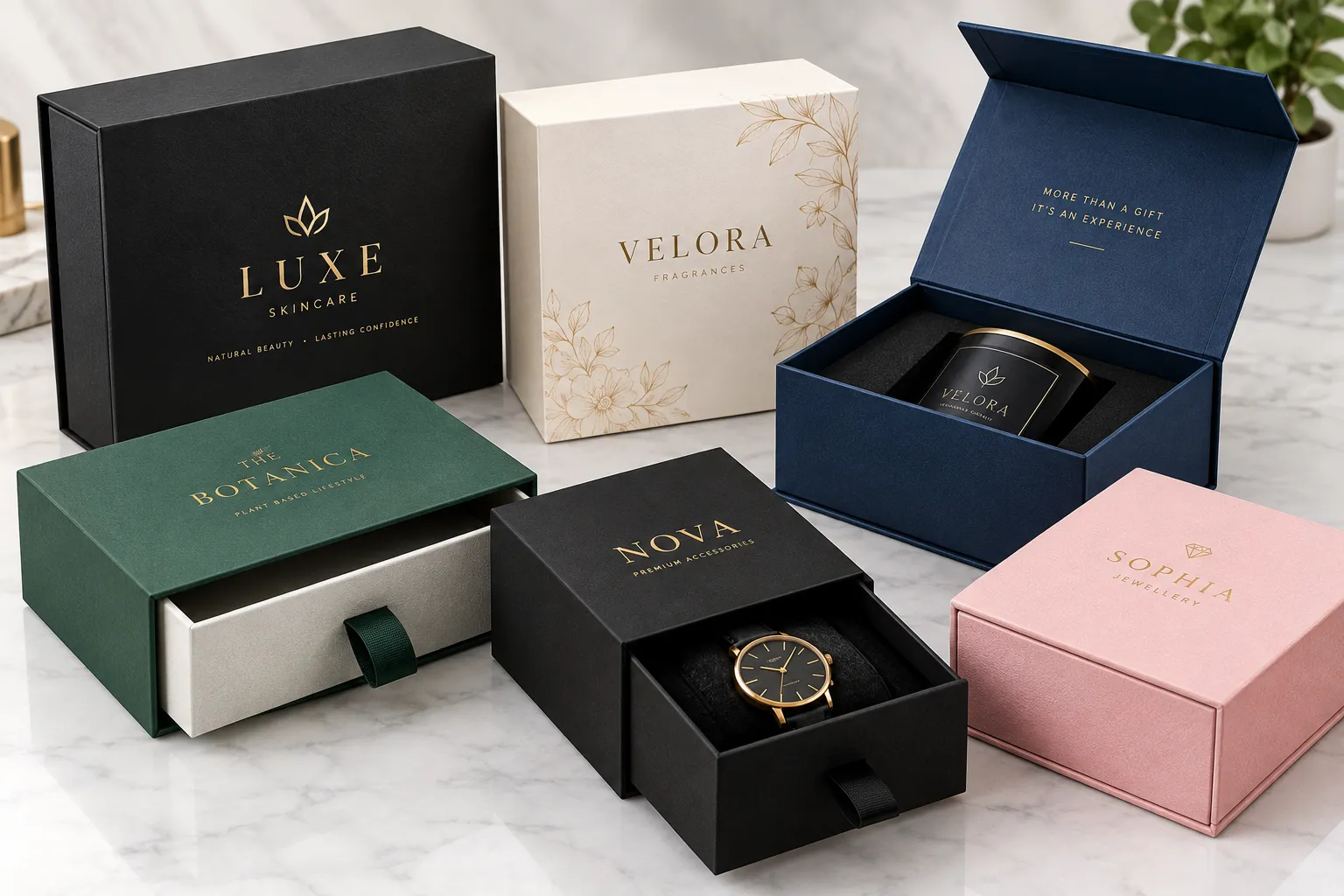
A customer holding a rigid box feels the weight and structure before they even open it, and that first impression sets the tone for everything inside. Custom rigid boxes give premium products the solid, high-end feel that folding cartons simply cannot match. At Packagly, brands come to us often after their customers start asking why a $150 product arrives in the same flimsy box as a $15 one.
This guide covers what sets rigid boxes apart from standard packaging, how style and finish choices affect cost, and what to check before committing to a bulk order. We will also cover a few sourcing mistakes that catch new brands off guard.
What Makes Rigid Boxes Different From Standard Packaging
Rigid boxes use a thick paperboard core, often four to six times denser than the board used in a folding carton, wrapped in printed paper or fabric. This construction gives the box weight, structure, and a satisfying resistance when it opens. Folding cartons fold flat for shipping, while rigid boxes hold their shape permanently once assembled.
Why do so many premium brands lean on rigid boxes specifically? The tactile experience matters as much as the visual one. A heavy lid that lifts smoothly off a base signals quality before a customer reads a single word of copy, which is exactly why cosmetics, electronics, and jewelry brands rely on custom rigid boxes so heavily.
Cost runs higher than standard packaging, and that trade-off deserves an honest look before committing. Rigid boxes cost more per unit and ship less efficiently since they cannot flatten, which raises freight expenses compared with a folding carton. For a product priced to support a premium feel, that added cost often pays for itself in perceived value and reduced returns tied to packaging damage.
Comparing Rigid Box Styles and Finishes
Not every rigid box style fits every product. A jewelry brand needs a compact, hinged-lid design, while an electronics brand might need a two-piece telescoping box with foam inserts. Here is how the common styles compare.
|
Box Style |
Avg. Cost (per 500 units) |
Structure |
Best For |
Assembly |
|
Two-piece lid and base |
$1,800–$2,800 |
High |
Gift sets, cosmetics |
Pre-assembled |
|
Hinged-lid box |
$2,000–$3,200 |
High |
Jewelry, watches |
Pre-assembled |
|
Telescoping box |
$1,600–$2,400 |
Medium-high |
Electronics, apparel |
Pre-assembled |
|
Drawer-style box |
$2,200–$3,500 |
High |
Premium gift, subscription boxes |
Pre-assembled |
A 2023 packaging industry survey from Smithers found that rigid packaging drives a measurably stronger perceived product value compared with folding cartons, particularly in cosmetics and consumer electronics categories. A separate industry report noted that products in rigid packaging see fewer damage-related returns during shipping, since the structural strength protects contents better than lighter board.
How Rigid Boxes Actually Get Made
Producing a rigid box takes more steps than a folding carton, and understanding the process helps explain the higher cost and longer lead time. First, a manufacturer cuts and scores heavy paperboard into the shape of the lid and base. Second, that paperboard gets wrapped in printed paper, foil, or fabric, glued precisely around every corner and edge. Third, the finished pieces are assembled, often by hand for complex shapes like hinged lids, then packed flat-fold or fully assembled depending on the style.
Turnaround time for rigid boxes runs longer than standard cartons, typically four to eight weeks depending on complexity and order size. Minimum order quantities tend to sit higher too, often starting around 500 units, since the hand-assembly steps make small custom runs less cost-effective for the manufacturer.
A packaging engineer who consults for beauty brands told us that new clients often underestimate how much finish choice affects both cost and perceived quality. "A soft-touch laminate on a rigid box changes how a customer describes the product before they even open it," she said. That single finish choice, she noted, often influences a customer's first impression more than the printed graphics themselves.
Cost Factors Behind Custom Rigid Box Pricing
Several variables drive rigid box pricing beyond the base structure. Wrap material makes a real difference, with printed paper costing less than specialty options like linen texture, suede finish, or fabric wraps. Foam inserts or fitted trays for electronics or fragile items add both material and labor cost, since these usually require custom die-cutting to match the product shape exactly.
Order volume still moves the price the most. A run of 500 boxes might cost $3.60 to $5.60 per unit depending on style and finish, while a run of 5,000 boxes can bring that down by 30 to 45 percent as fixed setup costs spread across more units. Adding a magnetic closure or a ribbon pull tab raises per-unit cost modestly but often improves the unboxing experience enough to matter for a premium product line.
Does shipping change the budget picture here too? Yes, and more than with folding cartons, since rigid boxes cannot flatten for transport and take up significantly more freight space. Ordering from a domestic manufacturer often costs more per box but cuts freight expense and shortens the lead time enough to offset that difference for many brands.
Choosing the Right Rigid Box Partner
Picking a rigid box manufacturer takes more consideration than comparing a price sheet. A general print shop might offer folding cartons and simple mailers, but a company that focuses specifically on rigid packaging, like Packagly, tends to understand corner-wrap precision and foam-fit tolerances that a generalist supplier often gets wrong on a first attempt.
Compliance still matters even at the premium end of packaging. Products shipped internationally often need to follow destination-country labeling rules, including country-of-origin marking and, for cosmetics or electronics, specific ingredient or safety certification disclosures on the packaging itself. Confirming these requirements with your manufacturer before finalizing artwork avoids a costly reprint after a shipment gets held at customs.
A small watch brand we worked with switched from a standard kraft mailer to a hinged-lid rigid box with a linen wrap finish and a custom foam insert. Within four months, the brand reported a noticeable drop in customer complaints about scratches during shipping, along with several social media mentions praising the unboxing experience.
Getting Started
Custom rigid boxes do more than protect a product. They shape how a customer feels about it before they even see what's inside. Match your box style to your product's shape and price point, plan for a longer production timeline than standard packaging, and always request a physical sample before a full production run.
If you are ready to move your product into premium packaging, Packagly can walk you through box styles, wrap materials, and insert options suited to your product and budget.
What is the difference between a rigid box and a folding carton?
A rigid box uses thick, non-folding paperboard that holds a permanent shape, while a folding carton uses thinner board that folds flat for shipping and assembles into shape at the point of use. Rigid boxes feel heavier and sturdier, which is why premium brands favor them for high-value products.
How much do custom rigid boxes cost?
Pricing typically ranges from $3.60 to $5.60 per box for orders of 500 units, dropping to $2.00 to $3.50 per box for orders of 5,000 units or more. Wrap material, finish choice, and added inserts like foam trays also affect the final price.
What is the minimum order quantity for custom rigid boxes?
Most manufacturers set a minimum around 500 units for custom rigid boxes, since hand-assembly steps make smaller runs less cost-effective to produce. Some suppliers offer smaller sample runs of 50 to 100 units for testing before a full production order.
How long does it take to produce custom rigid boxes?
Production typically takes four to eight weeks depending on box complexity, wrap material, and whether inserts like foam trays are included. Simpler two-piece box styles tend to sit at the shorter end of that range compared with hinged-lid or drawer-style boxes.
Do custom rigid boxes need to meet labeling regulations for shipping?
Products shipped internationally often need country-of-origin marking and, for categories like cosmetics or electronics, specific safety or ingredient disclosures printed on the packaging. Checking destination-country labeling rules before finalizing artwork avoids delays at customs.
What materials are used to wrap rigid boxes?
Common wrap options include printed paper, linen or suede-texture paper, and fabric wraps like cotton or velvet for high-end products. Printed paper costs the least, while fabric wraps add a noticeably premium feel at a higher price point.
Are foam inserts available for custom rigid boxes?
Yes, custom die-cut foam inserts are common for electronics, glassware, and other fragile products that need a fitted, protective cavity inside the box. Foam inserts add both material and labor cost since they require precise cutting to match the product shape.
Do custom rigid boxes reduce shipping damage compared to standard packaging?
Yes, the structural strength of rigid paperboard offers better protection than lighter folding carton material, which several industry reports link to fewer damage-related returns. Combined with a properly sized foam insert or fitted cavity, rigid boxes hold products more securely during transit.
What closures are available for custom rigid boxes?
Common closure options include magnetic flaps, ribbon pull tabs, and friction-fit lids that simply lift off the base. Magnetic closures add a premium touch but also add cost, so many brands reserve them for their highest-priced product lines.
Can custom rigid boxes be made from sustainable materials?
Yes, many manufacturers offer recycled paperboard cores and FSC-certified wrap papers as standard or optional upgrades for custom rigid boxes. Choosing sustainable materials can also support marketing claims for brands positioning themselves around environmental responsibility.
How do I choose the right rigid box style for my product?
Match the box style to how the product will be handled and displayed, since a hinged-lid box suits small items like jewelry while a telescoping or two-piece box suits bulkier products like electronics. Requesting a fit sample with your actual product before finalizing the order is the most reliable way to confirm the style works.
Why do custom rigid boxes cost more than standard packaging?
Rigid boxes require thicker board, additional hand-assembly steps, and often specialty wrap materials, all of which add labor and material cost compared with a folding carton. That higher cost typically reflects in a stronger unboxing experience and better protection, which matters most for premium-priced products