

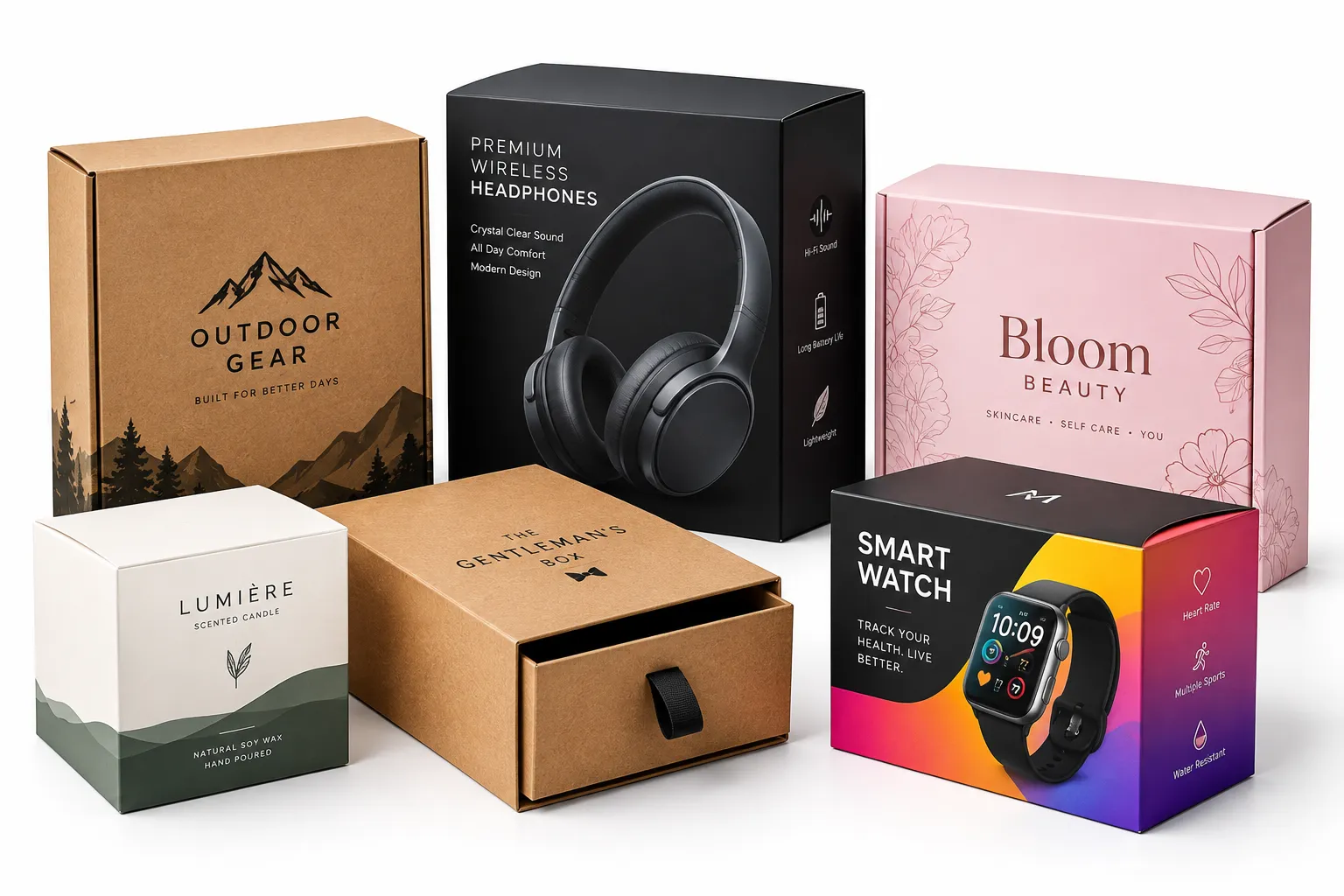
A shopper scans a shelf for maybe two seconds before moving on, and packaging is what stops that scroll. Custom retail boxes give a brand that split-second edge, turning a plain product into something a customer picks up and reads. At Packagly, we talk with small business owners every week who are switching from stock boxes to something built around their own product and brand.
This guide covers what makes a retail box work harder for a brand, how material choice and printing affect both looks and cost, and what to check before placing a bulk order. We will also cover common mistakes that push packaging budgets higher than they need to be.
Why Custom Retail Boxes Matter for Small Brands
A generic brown box does the job of holding a product, but it does nothing to sell it. Custom retail boxes carry branded color, logo placement, and product information that turns a shelf browser into a buyer. This matters most for brands competing against bigger companies with established shelf presence.
Why does this matter so much for a smaller business? Retail buyers judge new products on packaging almost as much as on the product itself, since packaging signals quality before a customer ever opens the box. A well-designed box with clear branding and useful product details builds trust faster than a plain package ever could.
Protection still comes first, even with a strong design. A box that dents easily or fails to protect fragile items during shipping undoes any branding investment the moment a customer opens a damaged product. Custom retail boxes need to balance visual appeal with structural strength suited to what they hold.
Comparing Materials and Box Styles
Different products call for different box builds. A cosmetics brand needs a rigid, premium-feel box, while a shipped electronics accessory needs corrugated strength to survive transit. Here is how the common options compare.
|
Box Type |
Avg. Cost (per 500 units) |
Durability |
Best For |
Print Quality |
|
Kraft folding carton |
$400–$700 |
Medium |
Food, small retail items |
Good, earthy look |
|
Rigid setup box |
$1,200–$2,000 |
High |
Cosmetics, electronics, gifts |
Excellent, premium finish |
|
Corrugated mailer box |
$500–$900 |
High |
Shipped e-commerce products |
Good, durable print |
|
Coated paperboard box |
$600–$1,000 |
Medium-high |
Retail shelf products |
Excellent, vibrant color |
According to a 2023 report from the Paperboard Packaging Council, brands that switched to custom retail packaging saw measurable gains in repeat purchase rates, largely tied to the unboxing experience and perceived product value. A separate Smithers packaging industry study found that packaging design influences purchase decisions for nearly two-thirds of first-time retail buyers, which is a strong argument for treating the box as part of the product itself.
The Process From Design to Finished Box
Getting from a logo file to a finished custom retail box follows a few clear steps. First, a designer builds a die-line, which is the flat template that shows exactly where folds, cuts, and printed elements will sit on the box. Second, the printer runs a proof, either digital or a physical sample, so you can check color accuracy and layout before full production starts. Third, once the proof is approved, the printer runs the full order, cuts and folds the boxes, and ships them to your warehouse or fulfillment center.
Turnaround time depends heavily on print method. Digital printing can turn around a small order in one to two weeks, while offset printing with custom die-cuts often takes four to six weeks for larger runs. Minimum order quantities follow a similar pattern, with digital runs starting around 100 to 250 units and offset runs typically requiring 1,000 units or more.
A packaging designer who works with consumer product startups told us that first-time brand owners often skip the physical proof step to save time. "Skipping the proof is the single biggest reason people end up with a box that looks wrong once it is in hand," she said. Colors on a screen rarely match printed color exactly, so a physical sample catches problems before a full production run locks them in.
Cost Factors Behind Custom Retail Box Pricing
Several factors drive the price of a custom retail box up or down. Box size and material thickness matter most, since a larger box with heavier board stock uses more raw material. Print complexity adds cost too, with full-color designs, foil stamping, or spot UV coating each adding a percentage on top of the base price.
Order volume changes the math significantly. A run of 500 boxes might land between $1.00 and $2.50 per unit depending on style, while a run of 5,000 boxes can drop that cost by 40 to 60 percent once setup fees spread across more units. Adding finishes like matte lamination or an insert tray raises the per-unit cost but often improves the unboxing experience enough to justify it for higher-price products.
Does shipping affect the total budget too? Yes, particularly for brands ordering from overseas printers, where freight costs and longer lead times can add both expense and risk to a launch timeline. Domestic printing tends to cost more per box but shortens lead time and reduces the chance of a shipment delay derailing a product launch.
Choosing the Right Packaging Partner
Picking a packaging supplier goes beyond comparing price per box. A general print shop can produce a folding carton, but a company that focuses specifically on retail packaging, like Packagly, tends to understand die-line accuracy, material sourcing, and shelf-ready folding standards better than a shop that treats boxes as a side product.
Retail compliance rules also come into play, especially for products sold through major retailers. Many large retail chains require shelf-ready packaging that meets specific dimension and barcode placement standards, and getting this wrong can lead to a shipment being rejected at the distribution center. Checking a retailer's packaging guidelines before finalizing a box design avoids that costly mistake.
A small skincare brand we worked with switched from a plain kraft box with a printed label to a coated paperboard box with full-color printing and a matte finish. Within three months, the brand landed two new boutique retail accounts that specifically cited the packaging as a reason they agreed to stock the product on a trial basis.
Getting Started
Custom retail boxes do more than hold a product. They protect it, present it, and often make the difference in a buyer's first impression. Match your box material to your product's needs, plan your print order around realistic lead times, and always request a physical proof before a full production run.
If you are ready to move past generic packaging, Packagly can help you figure out the right box style, material, and print finish for your product and budget.
What is the difference between a custom retail box and a standard shipping box?
A custom retail box is designed with branded printing, specific dimensions, and finishes meant to be seen by the end customer, often on a store shelf. A standard shipping box is typically plain, focused only on protecting the product during transit rather than presenting it.
How much do custom retail boxes cost?
Pricing usually ranges from $1.00 to $2.50 per box for smaller orders of 500 units, dropping to $0.40 to $1.00 per box for orders of 5,000 units or more. Material choice, print complexity, and added finishes like foil stamping also affect the final price.
What is the minimum order quantity for custom retail boxes?
Digital printing allows orders as small as 100 to 250 boxes, while traditional offset printing usually requires 1,000 units or more to be cost-effective. Many new brands start with digital printing to test a design before committing to a larger offset run.
How long does it take to produce custom retail boxes?
Digital print orders typically ship in one to two weeks, while offset printing with custom die-cuts can take four to six weeks depending on order size. Planning packaging orders well ahead of a product launch date helps avoid delays.
Are custom retail boxes required to meet retailer packaging standards?
Many large retail chains require shelf-ready packaging that follows specific dimension, barcode placement, and labeling rules, and shipments that do not meet these standards can be rejected at the distribution center. Checking a retailer's packaging guide before finalizing a design is a practical step to avoid rejected shipments.
What materials work best for custom retail boxes?
Kraft folding cartons suit food and small retail items well, rigid setup boxes fit premium products like cosmetics or electronics, and corrugated mailers hold up best for shipped e-commerce products. Matching material to product weight and fragility prevents damage during handling.
Can custom retail boxes include eco-friendly materials?
Yes, many printers now offer recycled kraft board, soy-based inks, and biodegradable coatings as standard options for custom retail boxes. Choosing these materials can also appeal to buyers who weigh sustainability alongside price when picking products off a shelf.
Do custom retail boxes help with brand recognition?
Yes, consistent branded packaging across a product line helps customers recognize a brand quickly, both on a shelf and in photos shared online. A packaging design that matches a brand's colors and logo builds familiarity faster than plain, unbranded packaging.
How do I know which box size fits my product?
Measuring your product with a small buffer for protective inserts, then checking that measurement against standard box templates, is the most reliable way to size a custom retail box correctly. A packaging supplier can also run a fit test with a sample product before a full production order.
What printing finishes are available for custom retail boxes?
Common finishes include matte lamination, gloss coating, spot UV highlights, and foil stamping for logos or key text. Matte finishes tend to photograph well for online listings, while foil stamping adds a premium feel that works well for gift or cosmetic packaging.
Do custom retail boxes cost more than generic packaging long term?
Custom boxes cost more per unit upfront, but many brands offset that with stronger sell-through rates and fewer returns tied to damaged or unclear packaging. Buying in larger volumes also brings the per-unit cost of custom boxes much closer to generic packaging pricing.
What should I check before placing a bulk custom retail box order?
Confirm the die-line matches your product dimensions, request a physical proof to check print color accuracy, and verify the material meets any retailer packaging requirements before finalizing the order. Catching these details before full production avoids costly reprints later