

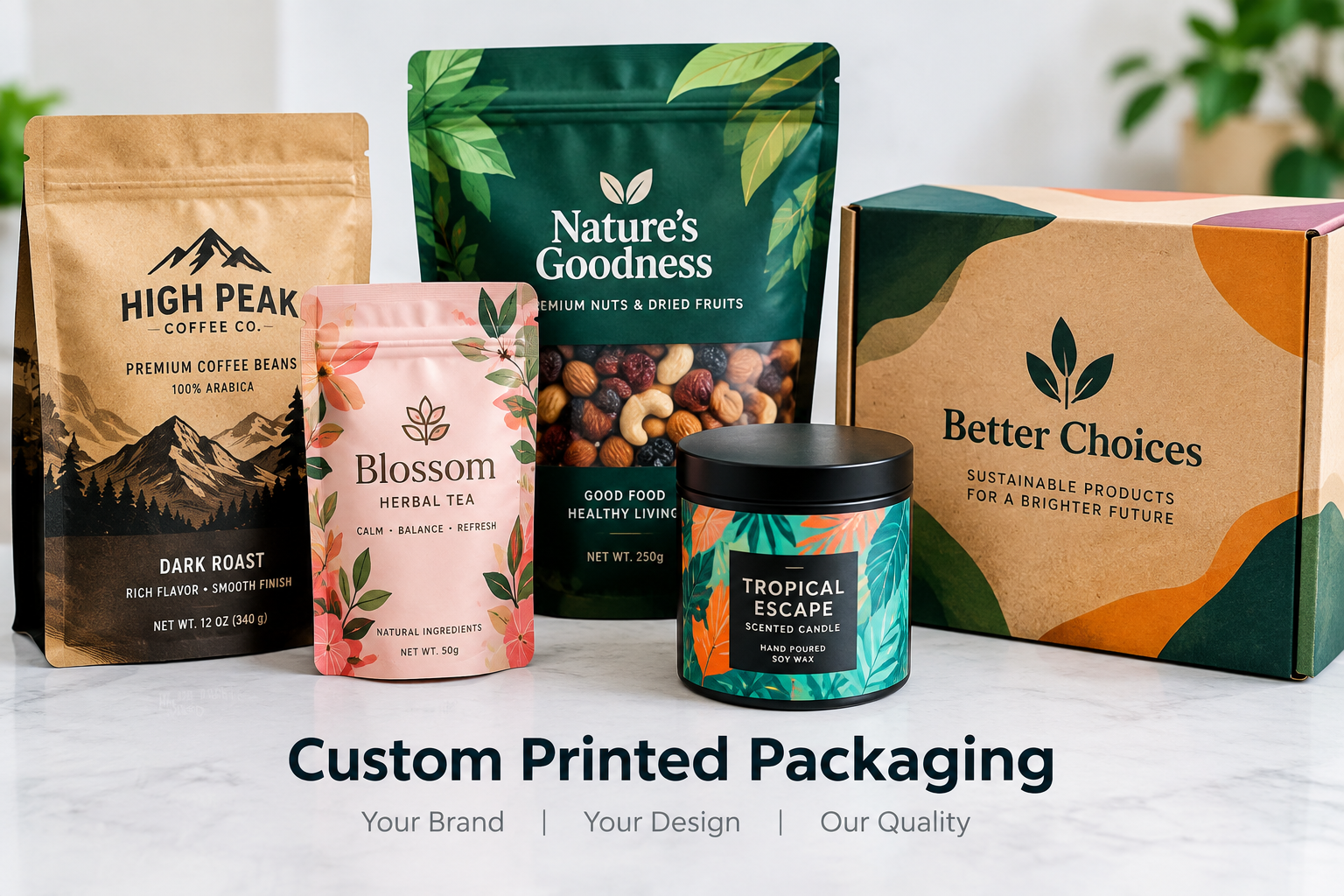
A plain brown box tells a customer nothing about the brand inside it. Custom printed packaging does the opposite job. It signals quality before the customer even opens the flap, and that first impression shapes how they judge everything inside. According to Ipsos (2024), 74% of U.S. consumers say packaging design influences their purchasing decisions, which means the box itself is doing real marketing work. Packagly works with small and mid-size brands making that jump from generic shipping boxes to something that looks and feels intentional. This guide covers what custom printed packaging actually changes for a brand, which materials fit different budgets, and how to choose a provider who can print at the quality your product deserves.
What custom printed packaging actually changes
Ask yourself this: would you remember a plain box the same way you'd remember one with your name and colors printed on it? Most people wouldn't, and that's the gap custom printed packaging closes. A branded box turns a routine delivery into a moment the customer notices and often shares. According to Packlane (2023), 42% of consumers are more likely to share a product photo on social media when it arrives in unique or premium packaging.
That sharing habit does real work for a brand's reach. A well-designed unboxing moment also builds trust before the product gets used even once. Custom printed packaging with clear branding, a consistent color palette, and a clean print finish tells a customer the company cares about details, which carries over into how they judge the product itself.
Packaging types and materials for custom printed packaging
Most brands choose between four common formats, and the right one depends on the product, the budget, and how the package ships.
|
Packaging type |
Typical cost (per 100 units) |
Print quality |
Best for |
|
Kraft mailer box |
$120–$220 |
Good for 1–2 color print |
Small businesses, cost-conscious brands |
|
Rigid gift box |
$280–$450 |
Excellent, full-color and foil options |
Premium retail, gift sets |
|
Corrugated shipper box |
$150–$260 |
Good, single or two-color print |
E-commerce and bulk shipping |
|
Custom tissue and insert kit |
$60–$120 |
Excellent, detailed print on tissue |
Adding a premium touch inside any box |
How a packaging provider builds a custom printed box
A good provider walks through a set process, and skipping a step here usually means a reprint later.
- Share your brand colors, logo files, and rough box dimensions so the designer can build an accurate print file.
- Choose the material and box style based on product weight, shipping method, and budget.
- Review a digital proof first, checking colors and text placement before anything gets printed.
- Request a physical sample if the order is large, since screen colors don't always match printed ink.
- Approve the final print file and confirm the production timeline against your launch date.
- Receive the finished order and check a handful of boxes for print consistency before storing the rest.
What changes the cost of custom printed packaging
Print complexity drives most of the price difference between two similar boxes. A single-color print costs far less than a full-color design with foil stamping or a spot-gloss finish, and that gap grows as the design gets more detailed. Order volume matters just as much. A run of 250 boxes costs more per unit than a run of 2,500, since setup costs spread across more units as the order grows.
Material choice adds another layer to the price. According to Procarton's 2024 consumer survey, 87.1% of shoppers say they'd choose cardboard packaging over plastic, which has pushed more brands toward recycled kraft and corrugated stock even though it can cost slightly more than standard cardboard. Any claim printed on the box, such as "recyclable" or "compostable," needs to match the FTC's Green Guides on environmental marketing claims, since a mismatch between the label and the actual material can draw regulatory attention.
Choosing the right packaging partner
A packaging design consultant we spoke with said the biggest mistake growing brands make is ordering print-only boxes without checking print consistency across a full production run. One small skincare brand we heard from switched from a generic supplier to a dedicated custom packaging provider after their first order arrived with visibly inconsistent color between boxes, a problem that cost them a reprint just before a product launch.
A general packaging wholesaler that prints boxes as a side offering won't always catch color drift across a large run or know which finish holds up best for a given material. A provider who works specifically on custom printed packaging, such as Packagly, will run color-matching checks throughout a production batch and know which paper stock takes foil and spot-gloss finishes cleanly. According to Dotcom Distribution's 2025 survey, 40% of consumers say they're more likely to buy again from a brand that delivers premium packaging, so the reprint risk from a rushed order carries a real cost beyond the box itself.
Ask any provider for a physical sample before committing to a full print run, not just a digital proof on a screen.
Ready to upgrade your packaging
Moving from a plain box to custom printed packaging comes down to picking the right material for your product, keeping the print design clean, and working with a provider who checks quality across the full run. Start with a small test order before committing to bulk pricing, so you can confirm the print matches what you approved. When you're ready to move forward, Packagly can walk you through material options and put together a quote that fits your order size and your budget.
Frequently asked questions
What is custom printed packaging?
Custom printed packaging is any box, mailer, or wrap printed with a brand's own colors, logo, and design rather than a generic, unbranded box. It covers everything from simple one-color kraft mailers to full-color rigid boxes with foil finishes.
How much does custom printed packaging cost?
Prices typically range from $60 per 100 units for simple tissue inserts to $450 or more per 100 units for rigid gift boxes with premium finishes. Print complexity, material choice, and order volume all push the price up or down.
Is custom printed packaging worth it for a small business?
For many small businesses, yes. A branded box builds trust and encourages social sharing, and Packlane's 2023 research found 42% of consumers are more likely to post a product photo when the packaging feels unique or premium.
What materials work best for eco-friendly custom printed packaging?
Recycled kraft paperboard and corrugated cardboard are the most common eco-friendly choices, since they print well and break down more easily than plastic-based packaging. Confirm any "recyclable" or "compostable" claim matches your local recycling guidelines before printing it on the box.
How long does it take to produce custom printed packaging?
Standard production usually takes two to four weeks from an approved proof to a finished order, depending on order size and finish complexity. Rush production is often available for an added fee if a launch date is tight.
Can I order custom printed packaging for a small batch?
Yes, many providers now offer low minimum order quantities, sometimes as low as 50 to 100 units, aimed at startups and small businesses. Per-unit cost runs higher at small volumes, so pricing usually improves once you scale past a few hundred units.
What's the difference between digital and offset printing for packaging?
Digital printing suits smaller runs and faster turnaround, while offset printing gives better color consistency and lower per-unit cost at higher volumes. Most brands under 1,000 units find digital printing more cost-effective for custom printed packaging.
Do I need a permit or license to sell branded packaging with my logo?
No permit is required to print your own logo on packaging, but any environmental or safety claim printed on the box, such as recyclability, must follow FTC Green Guides rules on accurate marketing claims. Trademark your logo separately if you want legal protection against copying.
How does custom printed packaging affect shipping costs?
Heavier materials like rigid boxes add more shipping weight than lightweight kraft mailers, which can raise per-package shipping costs at scale. Many brands balance a lightweight outer shipper with a smaller branded box or insert inside to keep both cost and presentation in check.
Does custom printed packaging hold up in humid or hot climates?
Standard corrugated and kraft materials can soften in high humidity, so brands shipping to hot, humid regions often choose a coated or laminated finish for added moisture resistance. Ask your packaging provider about a water-resistant coating if your product ships through variable climates.
Can custom printed packaging be reused or recycled by customers?
Most kraft and corrugated packaging is fully recyclable through standard municipal recycling programs, and sturdier boxes often get reused by customers for storage or gifting. Avoid laminated or heavily coated finishes if recyclability matters most to your customers.
How do I choose between a mailer box and a rigid box for my product?
A mailer box suits lightweight products shipped directly to customers, since it's cheaper and lighter to ship. A rigid box suits higher-value products or retail displays, where the sturdier feel and premium finish justify the added cost.