

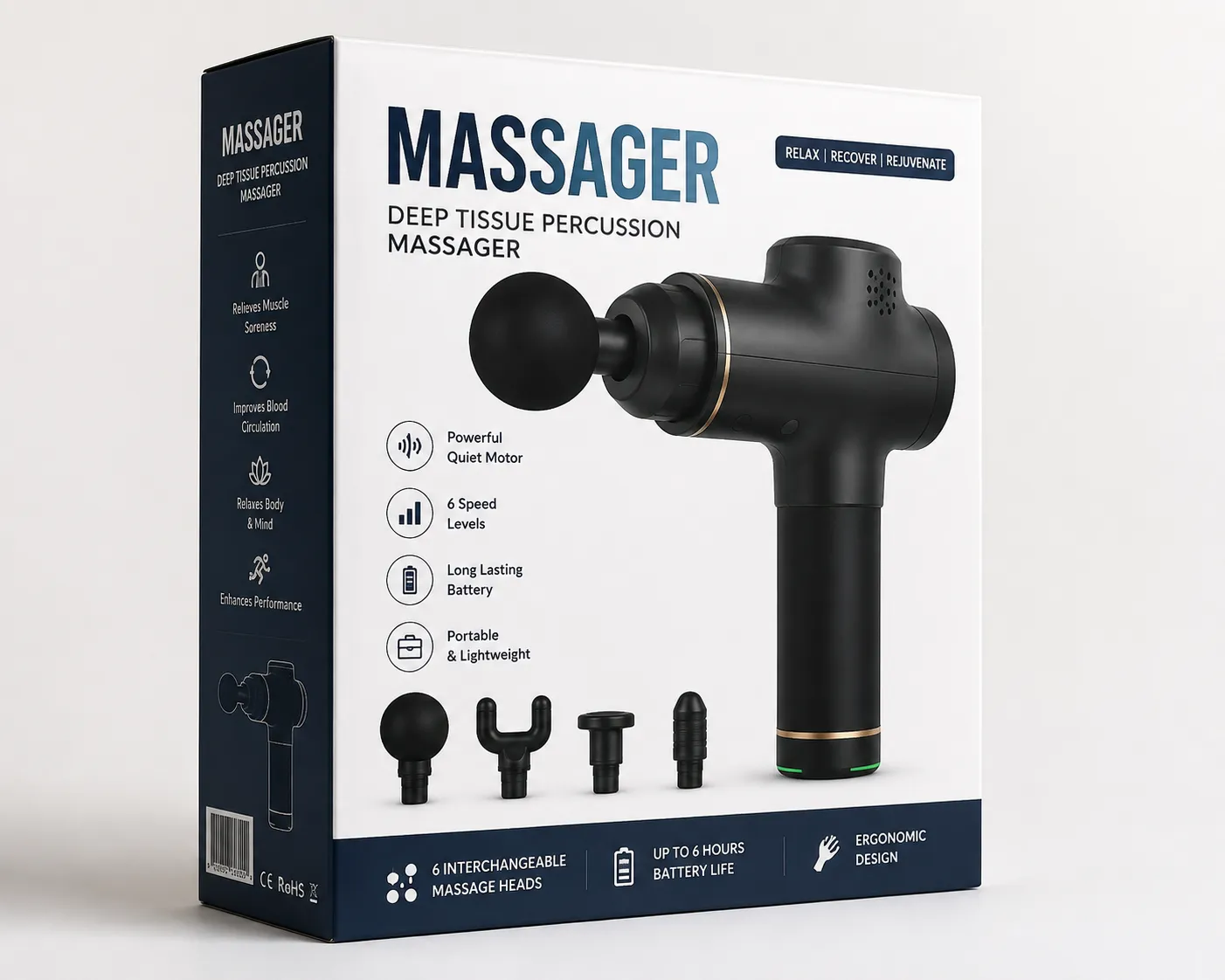
Electric massagers carry moving parts, batteries, and cords that need real protection between the factory floor and a customer's front door. At Packagly, we work with brands that sell handheld massagers, neck relaxers, and percussion devices, and the packaging question always comes up early. Custom packaging for massager products has to do two jobs at once: keep a delicate electronic device safe and make the unboxing feel like a premium health product rather than a random gadget. Get that balance right, and returns drop while reviews improve.
Why massager brands can't use generic electronics boxes
A standard electronics box works fine for something simple like a phone charger. Massagers carry batteries, motors, and sometimes glass or ceramic heating elements, which means the box needs internal structure, not just an outer shell. Custom packaging for massager products typically includes molded inserts or foam cutouts that hold the device firmly in place during shipping.
Vibration during transit causes more returns than most sellers expect. According to a 2022 study from the Fibre Box Association, products shipped with custom-fitted inserts showed a 38 percent lower damage rate compared to items packed with loose fill material. That single number explains why so many massager brands move away from bubble wrap and toward molded trays once order volume grows.
Does packaging really affect how a customer rates a product on Amazon or their own website? It does more than most sellers assume. A massager that arrives in a crushed box, even if the device inside works fine, tends to earn a lower star rating simply because the first impression felt cheap.
Material and structure options: pros, cons, and best fit
Massager packaging comes in a few common formats, and each one suits a different price point and shipping method. Rigid setup boxes with magnetic closures give a premium feel and protect well, making them a strong fit for higher-end percussion massagers sold direct to consumer. Corrugated mailer boxes with die-cut foam inserts cost less and still protect the device, which works well for mid-range products sold through online marketplaces.
Some brands choose a two-piece telescoping box for gift-style presentation, especially around holiday seasons when massagers sell as presents. Others stick with a simple folding carton and foam sleeve for budget models where shipping cost matters more than unboxing presentation.
|
Packaging Type |
Avg. Cost (500 units) |
Protection Level |
Best For |
Unboxing Feel |
|
Rigid box, magnetic closure |
2.20–3.50/unit |
High |
Premium percussion massagers |
Excellent |
|
Corrugated mailer, foam insert |
0.90–1.40/unit |
High |
Marketplace sales, mid-range devices |
Good |
|
Two-piece telescoping box |
1.30–1.90/unit |
Moderate |
Gift sets, seasonal sales |
Very Good |
|
Folding carton, foam sleeve |
0.60–0.90/unit |
Moderate |
Budget models, high-volume orders |
Fair |
Corrugated mailer boxes with foam inserts tend to give the best balance of cost and protection for brands shipping directly to customers rather than selling through retail shelves.
The process behind building custom massager packaging
The process starts with a fit test, where a packaging specialist measures the exact massager dimensions along with any charging cable or attachment heads included in the box. That measurement drives the foam or molded pulp insert design, since a loose-fitting cavity defeats the purpose of custom packaging entirely.
Printing happens next, usually on the outer box using offset printing for larger runs or digital printing for smaller test batches under 1,000 units. Once printed, the boxes get die-cut, folded, and paired with their matching inserts during assembly. A quality check at this stage confirms the massager sits snugly without shifting when the box tips or rotates.
Companies like Packagly that specialize in electronics and wellness product packaging handle insert design and box printing under one process, which keeps the fit accurate between test samples and full production runs. A mismatch between the sample and the bulk order is one of the most common complaints brands raise with generic packaging suppliers.
What drives the cost of custom massager packaging
Insert complexity has the biggest effect on price. A simple die-cut cardboard insert costs far less than a molded foam or pulp insert shaped to the exact contours of the device. Order quantity matters too, since tooling costs for custom inserts get spread across more units on larger runs.
Box material affects cost directly as well. Rigid setup boxes cost more per unit than standard corrugated stock, but they reduce damage claims on higher-value massagers where a single return can cost more than the packaging upgrade itself. Add-ons like foil logos, ribbon pulls, or printed instruction inserts each add a line item to the final quote.
A wellness brand we spoke with switched from generic bubble mailers to a custom foam-insert mailer box for their neck massager line. Their per-unit packaging cost rose by about 70 cents, but damage-related returns dropped from 6 percent to under 1 percent within the first quarter. That shift paid for itself within a few months once the return costs were factored in.
Choosing the right packaging partner for massager products
Not every packaging supplier understands electronics fit and finish. A general box maker might produce an attractive outer box without any experience designing an insert that actually holds a motorized device securely during a rough delivery route.
A specialist supplier that works with electronics and wellness brands regularly will know how to balance insert rigidity against unboxing feel, and which foam densities hold their shape after repeated compression in a shipping truck. A provider like Packagly that focuses specifically on device packaging will typically run a drop test on sample packaging before committing to a full production order, catching weak points before they show up as customer complaints.
Massager products sold in the United States also fall under FCC regulations for electronic emissions, and packaging often needs to display compliance markings or safety warnings required by federal law. A supplier familiar with these requirements will build space for required labeling into the box design from the start, rather than forcing a brand to add stickers after the fact.
Frequently Asked Questions
What makes custom packaging for massager products different from standard boxes?
Custom packaging for massager products includes fitted inserts, usually foam or molded pulp, designed around the exact shape of the device. Standard boxes rely on loose fill that shifts during transit.
How much does custom packaging for massager products cost for a small brand?
Small runs of 500 units typically range from 60 cents to over three dollars per unit depending on box type and insert complexity. Larger orders bring the per-unit cost down.
Is custom massager packaging required to meet any safety regulations?
Yes, massager products sold in the United States fall under FCC rules for electronic devices, and packaging often needs space for required compliance labeling.
What packaging type works best for shipping massagers directly to customers?
Corrugated mailer boxes with foam inserts tend to work best for direct shipping, balancing cost against protection for devices moving through standard parcel carriers.
How long does production take for a custom massager packaging order?
Digital print runs for smaller batches usually take 7 to 10 business days. Offset runs with custom foam inserts can take 4 to 6 weeks depending on tooling needs.
What is the minimum order quantity for custom packaging for massager products?
Many suppliers set minimums between 250 and 500 units for digital printing, though insert tooling costs often make smaller runs less cost-effective per unit.
Can I add my logo or instructions inside the massager packaging?
Yes, most suppliers offer foil stamping, full-color printing, and printed instruction inserts as standard options for massager and wellness device packaging.
Does the type of foam insert affect how well the massager survives shipping?
Yes, higher-density foam holds its shape better after repeated compression, which matters for massagers shipped multiple times through returns or exchanges.
What printing method suits a new massager brand testing the market?
Digital printing suits brands ordering under 1,000 units, since it avoids the higher tooling costs tied to offset printing runs for a first production batch.
Do custom massager boxes need special handling for battery-powered devices?
Yes, packaging for battery-powered massagers should isolate the battery compartment within the insert design to reduce pressure on terminals during transit.
How do I know if my current packaging is causing damage claims?
Track return reasons closely. A return rate above 3 percent tied to visible device damage usually points to insert design or box strength as the root cause.
What is the typical unboxing feel expected for premium massager brands?
Premium massager brands often use rigid boxes with magnetic closures, since the added structure signals a higher price point and reduces perceived risk for the buyer.