

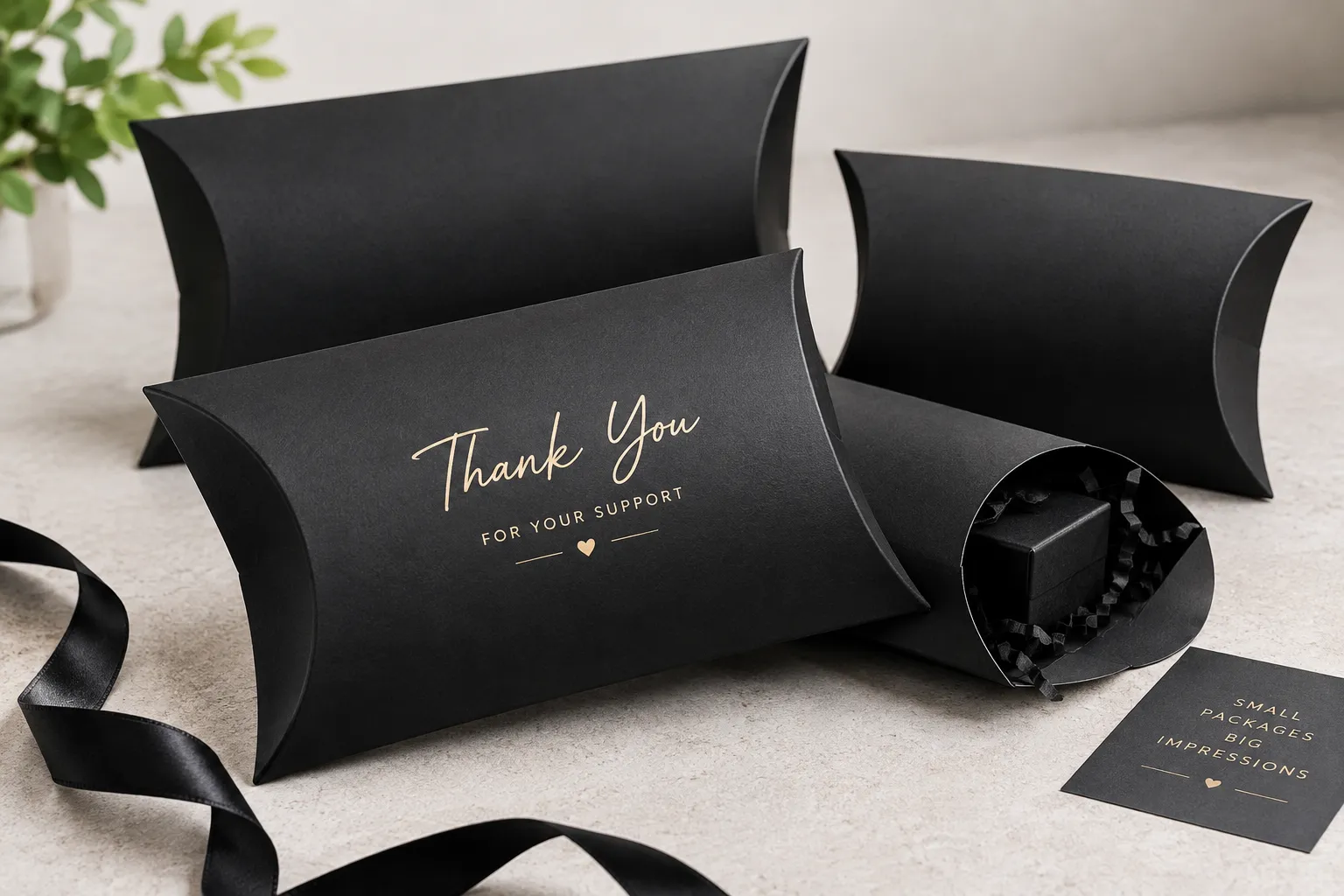
A small box can make a big first impression. Black pillow packaging boxes give jewellery, candles, and beauty products a clean, gift-ready look. Custom packaging companies like Packagly make them for brands that want polish without a heavy rigid box. Have you ever held a product in a deep black carton and felt it was expensive before you opened it?
That reaction explains why this shape keeps appearing on retail shelves and in unboxing videos. The curved sides look soft, the black finish makes metallic foil glow, and the flat-packed design keeps storage simple. For a small brand, that adds up to a strong look for a modest outlay.
In this guide, we cover materials, finishes, the ordering process, and what drives the price. We close with simple checks for choosing a supplier. Each section answers a question we hear from first-time buyers.
Why black gift packaging works for small products
Shoppers judge a product by its box long before they test the product. The Paper and Packaging Board commissioned an Ipsos survey in 2018. It found that 72% of Americans say package design often shapes their buying choices. The same research found that 63% say paper and cardboard packaging makes products seem premium.
Black does a lot of the work here. It makes metallic foil, white ink, and bright products stand out. The curved pillow shape suits small items. That makes black pillow boxes for small gifts a natural fit for earrings, lip balms, soap bars, and candle samples.
Why do brands pick this style over a plain mailer? The answer is mostly practical. Black pillow packaging boxes ship flat and assemble in seconds.
Sellers in the UK, Canada, and Australia often order wholesale black pillow boxes for retail ranges. One design can cover a whole collection, and a single dieline keeps reorders simple.
These boxes do have limits. The curved ends cannot hold heavy or sharp items without an insert, and thin board can crush in a parcel. For heavier products, we suggest a corrugated mailer or a rigid box. For gift cards, small accessories, and light beauty items, the pillow shape works well.
Paperboard, kraft, and corrugated options for custom pillow boxes
Your board choice changes how the box looks, feels, and travels. Most custom pillow boxes use one of four setups, and each suits a different product. We compare them in the table below, but a few details matter first.
Solid bleached sulphate (SBS) paperboard is the usual starting point. Its smooth surface takes sharp print, and it holds foil stamping well. Matte black pillow boxes for jewellery look flat and modern, though scuffs show if boxes rub together in transit.
Soft-touch lamination adds a velvety feel that customers remember. It shows fingerprints more than plain matte, and plastic film can make recycling harder. A water-based coating keeps the box easier to recycle and still looks clean.
Kraft stock suits soap, candle, and eco-minded brands. Black ink on brown board gives a muted, earthy tone. Fine foil detail can lose sharpness on rough kraft, so request a test print.
Corrugated E-flute is the strongest of the four. It protects heavier or fragile items in parcel networks, though the thicker walls limit fine detail. Choose it when the box ships without an outer carton.
Finishes add detail on top of the stock. Silver or gold foil, embossed logos, and spot UV gloss all stand out on black. Pick one or two, since too many effects can make a small box look busy.
Style options change the look too. Standard styles fold flat and lock at the seam. Some makers add a hang tab for retail pegs, a ribbon slot, or a small clear window.
|
Option |
Look and feel |
Best for |
Strength |
Watch out for |
|
Paperboard, matte coating |
Flat, smooth, modern |
Jewellery, cosmetics, stationery |
Light to medium |
Scuffs show if boxes rub |
|
Paperboard, soft-touch lamination |
Velvety, premium |
Gift sets, beauty kits |
Light to medium |
Fingerprints; film limits recycling |
|
Black kraft stock |
Natural, earthy texture |
Soap, candles, eco brands |
Medium |
Foil detail can look soft |
|
Corrugated E-flute |
Slightly ribbed, sturdy |
Heavier items, parcel shipping |
High |
Thicker walls limit fine detail |
Dielines, proofs, and price: what to expect
Ordering custom boxes feels simpler once you know the steps. Most projects run in the same order, and the cost follows the choices you make along the way.
The ordering process step by step
What does a box maker actually do between your first message and your parcel arriving? Here is the usual order:
- You share the product size, weight, and quantity.
- The maker suggests a board, finish, and style, then sends a dieline template.
- You add your artwork to the dieline and use a rich black build for large solid areas.
- The maker sends a digital proof, and you check spelling, colours, and logo placement.
- You review a printed sample when the order is large or the colour is critical.
- The factory prints, cuts, folds, glues, packs, and ships the run.
Always approve a printed sample for large black areas, because black can look different on screen and on board. One packaging designer who works with UK retailers says a screen proof cannot show texture or sheen.
What affects the cost
Price per box falls as quantity rises, because setup work covers more units. Printing plates and cutting dies cost about the same for a small run or a large one.
Box size, board thickness, and ink colours all move the price. So do finishes such as foil, embossing, and soft-touch lamination. Shipping, import duties, and VAT or GST add to the final bill when you buy from overseas. Black pillow packaging boxes usually cost less to make than rigid gift boxes, since they use thinner board and ship flat.
Here is a simple example. A jewellery seller in Toronto wants a velvet look for her gift range. She compares full soft-touch lamination with matte-coated paperboard and one foil stamp. The second option keeps the artwork crisp, stays easier to recycle, and leaves more room in the budget.
If you sell in the UK, check the packaging Extended Producer Responsibility rules. UK government guidance, updated in 2025, sets the starting point at £1 million in turnover and 25 tonnes of packaging a year. Larger producers pay fees that depend on how easy the packaging is to recycle. Many small brands fall below those lines, but choosing recyclable board early avoids rework later.
How to choose a reliable box supplier
A good supplier saves you money before you place the first order. The cheapest quote rarely tells the full story, so we suggest comparing a few specific things.
Ask each supplier these questions:
- Can you send a printed sample on the board I plan to use?
- Do you provide a dieline and a digital proof before printing?
- Which board grades and certifications, such as FSC, do you offer?
- How do you handle colour matching for solid black areas?
- What are your lead times to my country, and who handles customs forms?
- Can you quote with and without finishes so I can compare?
Specialist suppliers handle these questions every day. A box maker that focuses on custom packaging, such as Packagly, works with dielines, board grades, and finishes daily. That experience helps it flag a weak design before printing starts. A general print shop or reseller may treat boxes as a side job and rely on a third party for production.
Shipping matters for cross-border orders. A supplier that ships to the UK, Canada, or Australia regularly will know the customs forms, delivery times, and tax rules for your market.
Reviews and past work count for a lot. Ask to see photos of finished black boxes, since dark stock shows flaws more than white. A supplier that shares real examples is easier to judge before you commit.
Common buyer questions
What are black pillow packaging boxes used for?
They hold small, light items such as jewellery, cosmetics, candles, soap, and gift cards. Each box usually holds one item or a small set. The curved shape suits wedding favours and event gifts too. Brands pick black because it makes foil and white logos stand out.
Are black pillow boxes suitable for jewellery?
Yes, when the pieces are light and sit in a foam or card insert. Black stock shows off silver and gold well, and the box ships flat before assembly. For heavy chains or sharp items, add a firm insert or switch to a rigid box.
How much do custom black pillow boxes cost?
Price depends on quantity, size, board, ink colours, and finishes. Larger runs lower the price per box, because setup costs spread across more units. Ask for quotes at two or three quantities, with and without foil or soft-touch lamination, so you can compare.
Can I buy wholesale black pillow boxes in the UK?
Yes. Many box makers sell wholesale and custom runs to UK retailers and online sellers. Ask about VAT, delivery times, and whether the quote includes shipping. Request a dieline template with your logo on it before you commit to a full run.
What finish works best for matte black pillow boxes?
A matte aqueous coating is the simplest choice. It looks flat and modern, and it recycles more easily than plastic film. Soft-touch lamination feels richer but shows fingerprints. Add one effect, such as foil or embossing, on the logo for contrast.
Do I need a permit to sell products in pillow boxes?
No permit is needed for the box itself. Other rules still apply. UK businesses above certain size limits must follow packaging EPR rules, food-contact packaging must use approved materials, and cosmetics need correct labels. Check your own market’s rules, or ask your supplier for material details.
Are black pillow boxes recyclable?
Plain paperboard boxes are widely recyclable. Plastic lamination, heavy foil, and glued-on inserts can make recycling harder. For the easiest route, choose uncoated or water-based coated board, keep foil small, and use paper inserts. Check your local recycling rules for final details.
Do black pillow boxes last in humid places like Australia?
Paperboard absorbs moisture, so humid air can soften corners and warp flat-packed stacks. Store boxes in sealed cartons, off the floor, in a cool room, especially in coastal cities. A water-based or varnish coating adds some resistance, but boxes still need dry storage.
Can I order custom black pillow boxes with a logo for Canada?
Yes. Many box makers ship internationally, and you can add a white, silver, or gold logo on black stock. Ask about GST or HST, customs paperwork, and lead times before you pay. Share your dieline early so the factory can confirm print details.
How can I lower the cost of custom pillow boxes?
Use a standard size, one or two ink colours, and a single finish. Order a larger run to spread setup costs. Skip extras such as inserts, windows, or embossing unless they add clear value. Request a sample before approving the full order.
Choosing a box starts with a few simple decisions: the stock, the finish, and the quantity. Write down your product size and weight, then decide how many effects your budget can handle. Once you have those details, reach out to Packagly to ask about board options, dieline templates, and samples for your project. A clear brief makes quotes easier to compare and keeps the project on track. Take your time, check a printed sample, and pick the box that fits your product and your customers