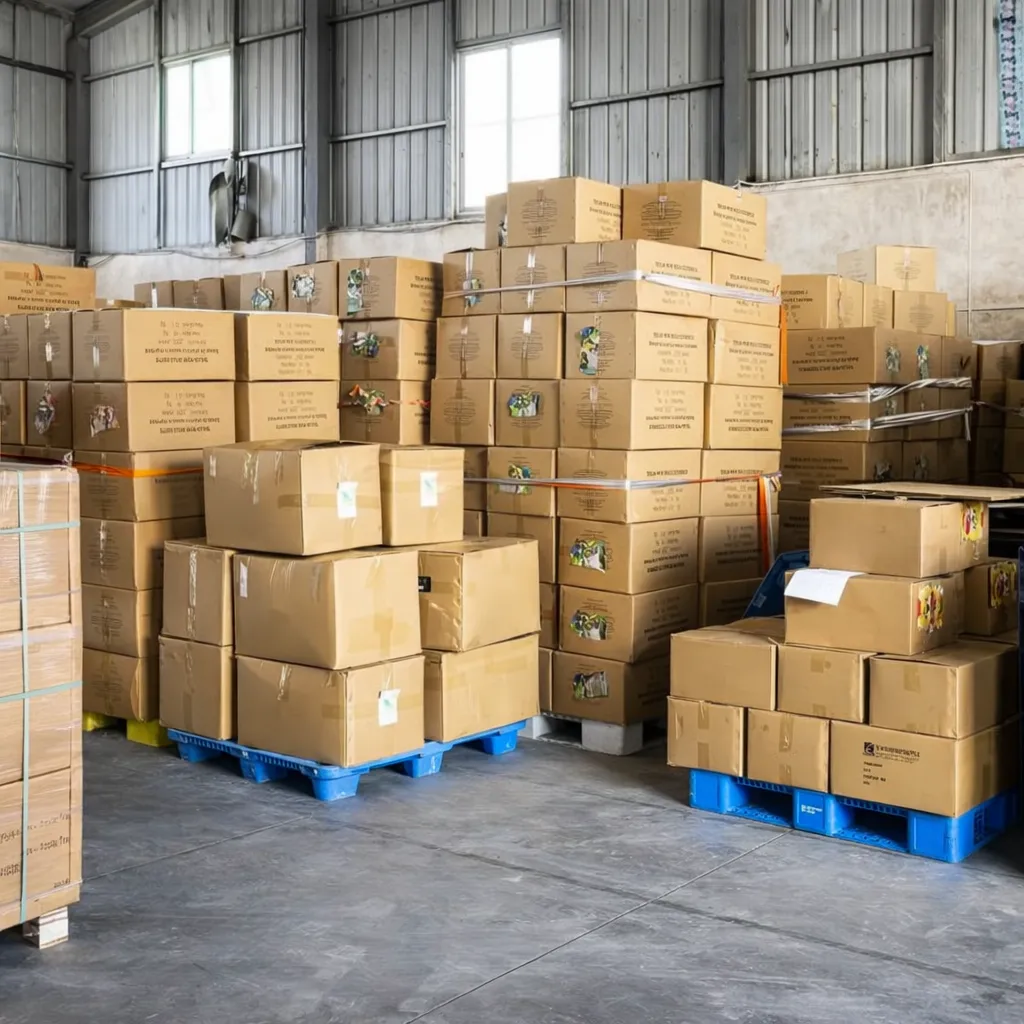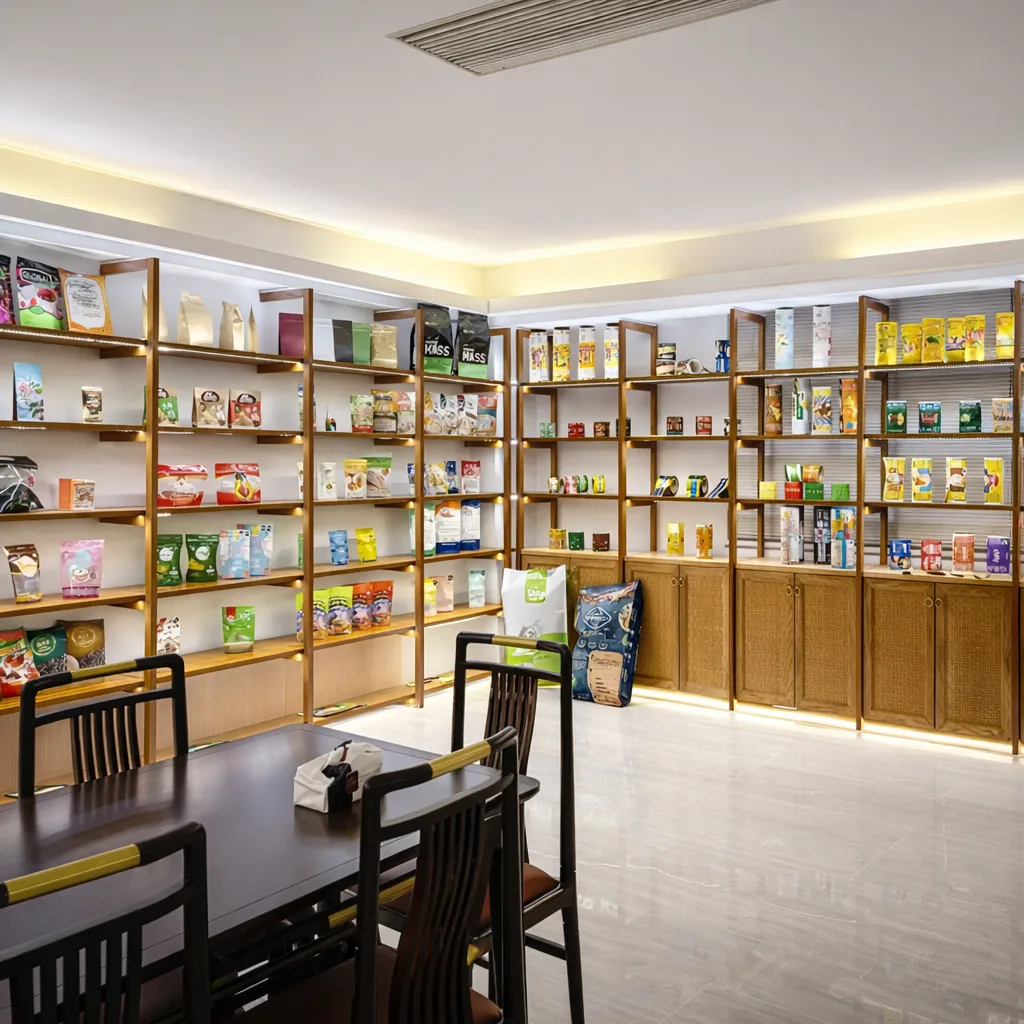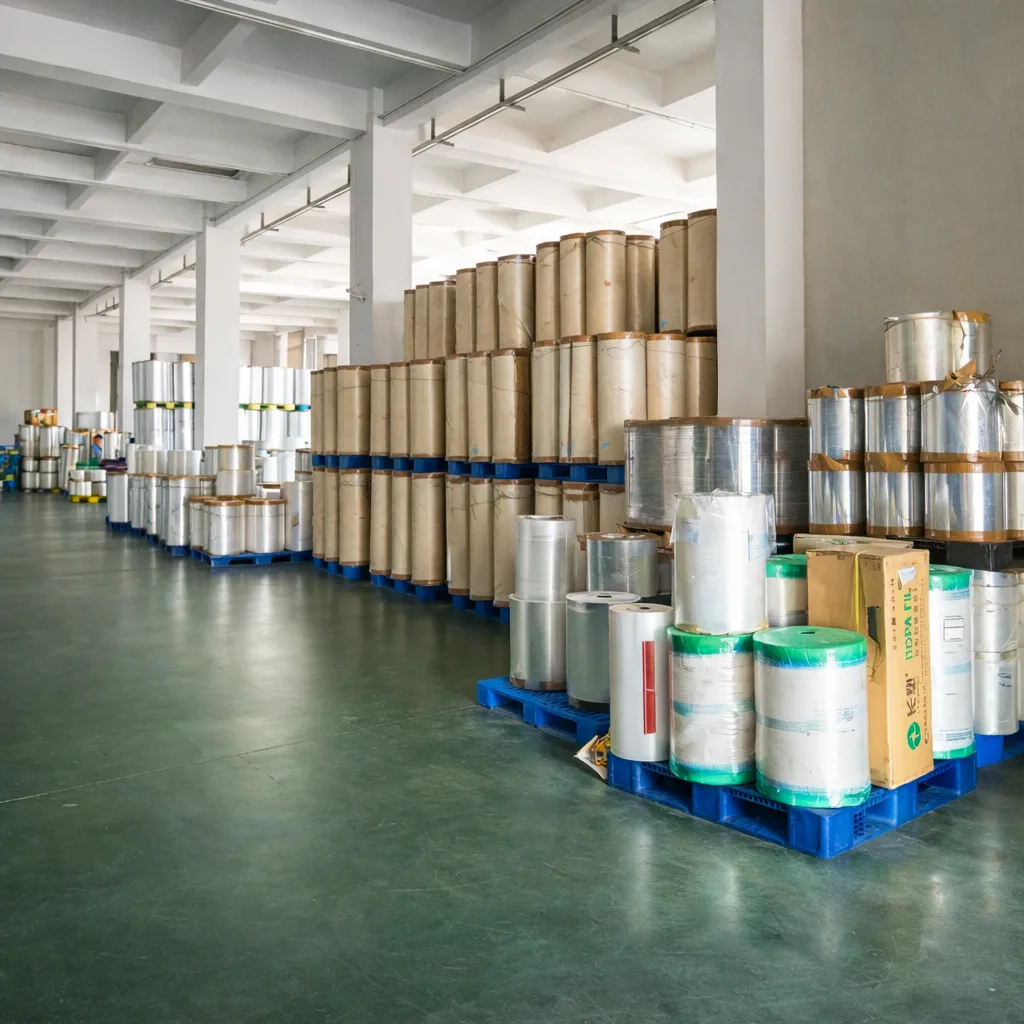


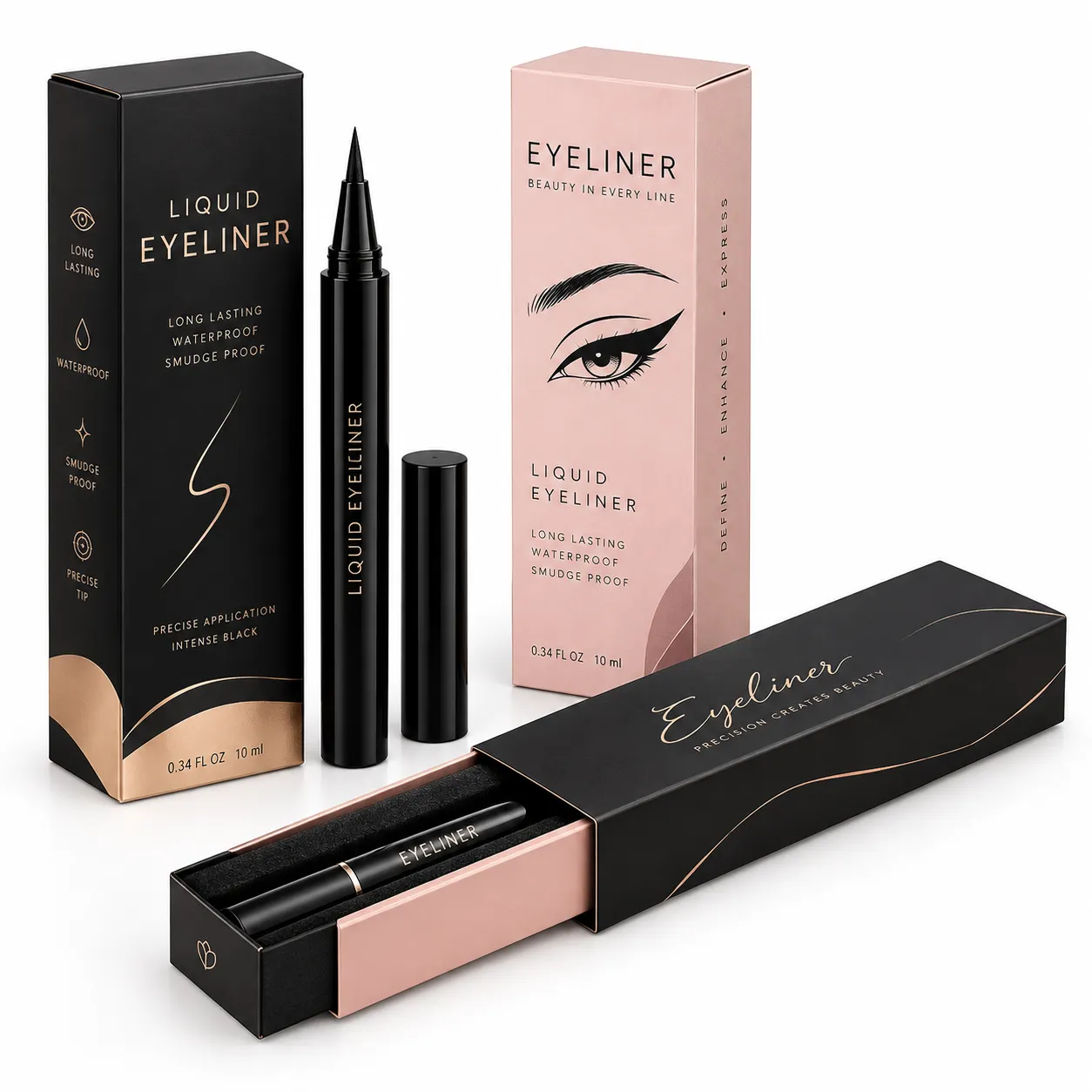
A tube of eyeliner is tiny, so the box around it has to work twice as hard on a shelf. A plain white carton with a printed sticker doesn't say much about a brand, and a flap that won't hold shape after one open doesn't help repeat sales either. Custom eyeliner packaging boxes solve both problems by giving each product a container sized for its shape, printed with the brand's own colours, and built to survive a warehouse, a delivery van, and a bathroom shelf.
Suppliers such as Packagly work with makeup brands and private label sellers across the US, UK, Canada, Australia, New Zealand, Ireland, and South Africa, turning generic tubes into boxes that protect the product and catch a shopper's eye at the same time. What actually makes a box worth the extra cost over a plain sticker label? This guide walks through the materials, the build process, the cost drivers, and the questions worth asking before you order packaging for your own eyeliner line.
Why makeup brands choose custom eyeliner packaging
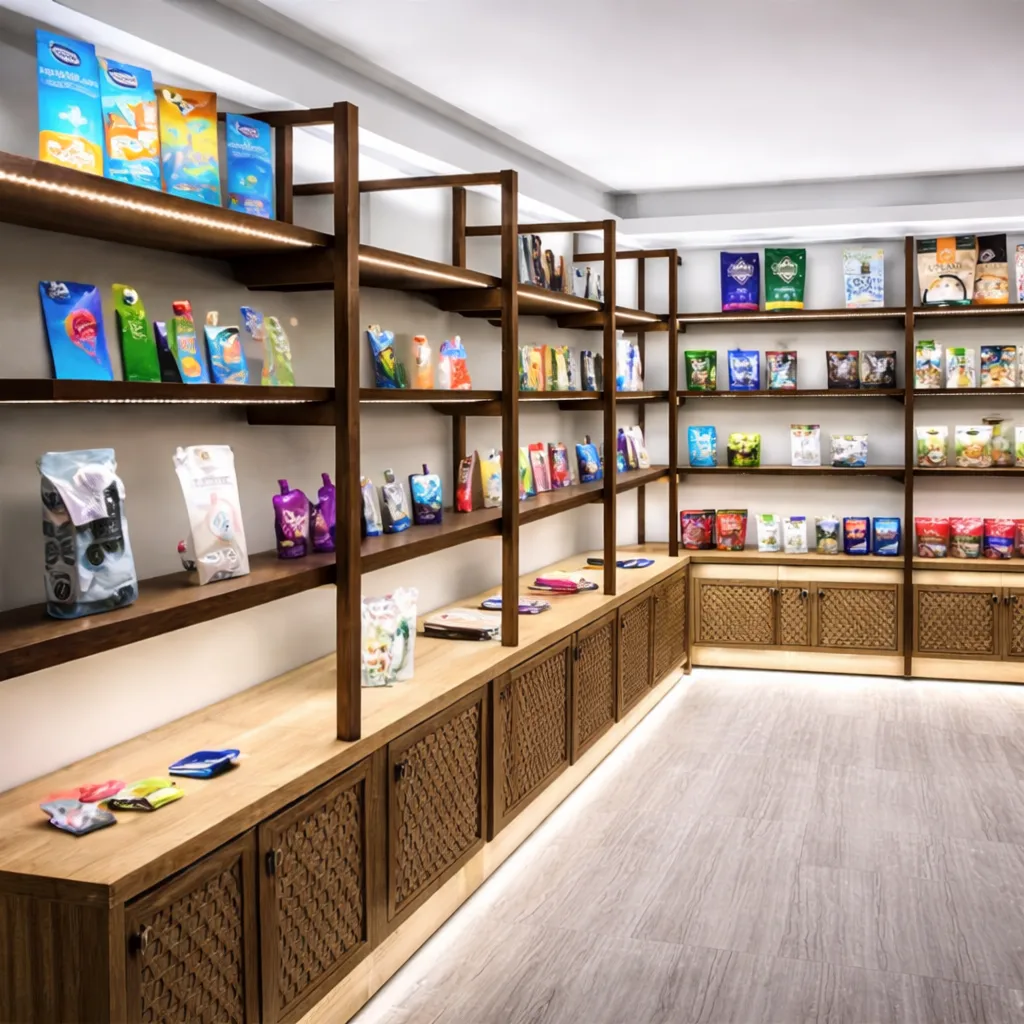
Brands move away from plain tubes and stock cartons for one main reason: custom eyeliner packaging boxes change how a shopper reads the product in the first few seconds on a shelf or in an unboxing video. A box with a soft-touch finish, a foil logo, or a clear window gives someone a reason to stop scrolling and add it to a cart.
Retail buyers judge cosmetics fast, often faster than they judge the formula itself. A buyer is far more likely to stock a line that already looks finished, with shade names, ingredient callouts, and brand identity printed clearly on the front panel rather than a sticker slapped on the side.
Packaging protects the product too, not just the image. A snug-fitting insert stops a glass eyeliner bottle from rattling and cracking in transit, and a properly sized box keeps a pencil from snapping inside a shipping carton. Brands moving from generic tubes to individually sized boxes often report fewer damaged returns from online orders.
Materials and box styles for eyeliner products
Eyeliner boxes come in a handful of common builds, and the right pick depends on the eyeliner format, the price point, and where the product ships.
Folding cartons made from SBS (solid bleached sulfate) paperboard suit most eyeliner pencils, pens, and liquid tubes, giving sharp, full-colour print at a moderate cost. Rigid boxes, thicker and sturdier, fit premium or gift-set eyeliners where the box itself is part of the unboxing experience. Kraft board gives a warmer, recycled look that fits eco-friendly eyeliner packaging, though fine print detail runs slightly softer on the uncoated surface.
Window boxes let a shopper see the product before opening, which works well for liquid eyeliner with a distinct applicator or a colour-coded cap. Finding the best material for eyeliner boxes usually comes down to how fragile the format is, not which board looks nicest in a sample pack; glass bottles need more cushioning than a solid pencil does.
Climate plays a role in material choice as well. Humid regions in South Africa and parts of Australia call for a moisture-resistant coating so the board doesn't warp on a store shelf, and boxes shipped through cold Canadian winters hold up better on slightly heavier stock that resists cracking at the fold lines.
|
Material |
Avg. cost (per 1,000 boxes) |
Best for |
Durability |
|
SBS folding carton |
160–230 |
Standard eyeliner pencils and pens |
Good, add lamination for extra strength |
|
Rigid box |
260–380 |
Premium or gift-set eyeliners |
High, holds shape through repeat use |
|
Kraft paperboard |
140–200 |
Eco-focused and recyclable lines |
Moderate, keep away from high humidity |
|
Window carton |
180–260 |
Liquid eyeliner with visible applicator |
Good, window film adds slight rigidity |
The process behind a custom-printed eyeliner box
The order process for a custom eyeliner box follows a fairly set path from first sketch to shipped pallet.
A supplier starts with your product's shape, weight, and shade range, then recommends a board weight and structure that fits it. Next comes artwork: your design team, or the supplier's in-house designer, builds a print-ready file with bleed, dielines, and colour codes matched to your brand palette. Knowing how to design eyeliner packaging boxes properly at this stage matters, since a proof follows so you can check fit, fold, and colour accuracy before full production starts.
Printing usually runs on offset or digital presses depending on order size, with finishes such as matte lamination, spot UV, or foil stamping applied after the base print. Die-cutting shapes the flat sheet into the box, and gluing or locking tabs close it into its final form. Quality control checks a sample batch for colour match and structural strength before the full run ships.
A small makeup brand in Manchester, switching from a generic stock carton to a custom-printed eyeliner box with a foil logo and a snug insert, cut breakage complaints on liquid eyeliner shipments by working with their supplier on a tighter foam-free tray rather than loose tissue padding. That kind of fix usually comes out of the proofing stage, not the final print run.
What drives eyeliner packaging costs
Cost for custom eyeliner packaging boxes moves with four main factors: board type, print complexity, order volume, and finishing.
A single-colour print on kraft board costs less than a four-colour design with foil stamping and spot UV. Order size matters more than most brands expect; a run of 5,000 boxes can cost 30 to 40 percent less per unit than a run of 1,000, since setup and plate costs spread across more units. Box structure adds cost too, since a rigid box with a magnetic close runs higher than a simple tuck-top folding carton.
The market backs up why brands keep investing in this packaging. The global eyeliner market was valued at $6.1 billion in 2023 and is projected to reach $9.9 billion by 2033, according to Allied Market Research (2024). More brands are launching into that growth, and packaging quality often decides which box a shopper picks up first on a crowded shelf or in a search result grid.
A packaging engineer working with indie beauty brands on the East Coast put it plainly: eyeliner boxes fail most often not from weak board, but from an insert that lets a glass bottle shift and chip during transit. Local companies like Packagly that specialize in cosmetic packaging across the US, UK, and Canada tend to catch that structural issue at the proofing stage, before it turns into a customer complaint.
Choosing the right packaging partner for your brand
Choosing a supplier for custom eyeliner boxes comes down to a short checklist: printing capability, minimum order size, turnaround time, and knowledge of cosmetic labeling rules.
Ask any potential supplier whether they understand ingredient labeling requirements for cosmetics, since a box that skips a required disclosure can hold up a shipment at customs. In the US that means following FDA and Fair Packaging and Labeling Act rules on cosmetic labels, and in the UK and EU it means meeting Regulation (EC) No 1223/2009 on cosmetic products, including INCI ingredient listing. A supplier who can't answer that question fast probably hasn't handled cosmetic packaging before.
Sustainability credentials carry more weight than they used to. According to FSC UK (2023), 77 percent of UK consumers now recognise the FSC logo, and 51 percent say they would pay more for a product in FSC-certified packaging. Asking for a chain-of-custody certificate on board stock is a fair question for any beauty brand selling into that market.
What separates a packaging specialist from a general print shop or a national chain? A supplier who works on cosmetic boxes every day, such as Packagly, will already know standard eyeliner tube and bottle dimensions, low minimum order quantities for testing a new shade launch, and finishes that hold up under repeated handling at a makeup counter. A general print shop can produce a box, but it may not know why a glass bottle needs a die-cut foam tray rather than a flat cardboard shelf.
Does the supplier offer a physical sample before the full run? That single question can save a brand from an expensive reprint.
Frequently asked questions
What are custom eyeliner packaging boxes usually made from?
Most are SBS folding carton, rigid board, or kraft paperboard, sometimes with a window film for liquid eyeliner. Humid climates need a moisture-resistant coating, while colder regions do better with slightly heavier stock that resists cracking.
How much do custom eyeliner packaging boxes cost for a small order?
Small runs of 500 to 1,000 boxes typically cost more per unit than larger runs, often in the $140 to $380 range per 1,000 depending on material and finish. Volume discounts usually start around 2,500 to 5,000 units.
Is there a minimum order quantity for eyeliner packaging boxes wholesale?
Many suppliers set a low minimum, sometimes as few as 100 to 250 units, so a new beauty brand can test a box style before committing to a large production run.
Do eyeliner boxes need to meet labeling regulations in the US?
Yes. Cosmetic packaging sold in the US needs to follow FDA and Fair Packaging and Labeling Act rules on ingredient disclosure and net contents. A supplier working across the US should confirm this before printing.
What packaging rules apply to eyeliner sold in the UK and EU?
UK and EU sellers need labels that meet Regulation (EC) No 1223/2009, including a full INCI ingredient list and a responsible person's address printed on the box or an accompanying insert.
How long does it take to get custom eyeliner packaging boxes printed and delivered?
Turnaround runs six to ten working days for standard orders once artwork is approved, though rush options exist for an added fee. Foil stamping or spot UV can add a few extra days.
Can eyeliner boxes be made from recyclable material for Australia and New Zealand markets?
Yes, kraft and recycled SBS board options work well for eyeliner brands selling into Australia and New Zealand, where recyclable packaging is increasingly expected at retail.
What is the difference between a folding carton and a rigid eyeliner box?
A folding carton ships flat and costs less, suited to standard pencils and pens. A rigid box holds its shape permanently and feels more premium, better suited to gift sets or higher-priced eyeliners.
How much does custom printing add to the price of an eyeliner box?
A basic one-colour print adds little to base board cost, while a four-colour design with foil or spot UV can raise the per-unit price by 20 to 50 percent depending on order size.
Do eyeliner boxes protect glass liquid eyeliner bottles during shipping?
A box with a die-cut foam or cardboard insert holds a glass bottle in place and absorbs shock, which matters more for direct-to-door orders than for boxes that travel palletized to a retail warehouse.
What should a Canadian beauty brand look for in a packaging supplier?
Look for cosmetic labeling knowledge, board that holds up in cold storage without cracking, and a supplier familiar with cross-border shipping so custom eyeliner boxes Canada orders clear customs without delay.
Can small indie beauty brands order low quantities of custom eyeliner boxes?
Yes, most packaging suppliers now offer low minimum order quantities specifically so smaller or newer brands can launch a shade range without buying a year's worth of stock upfront.
A practical next step
Custom eyeliner packaging boxes do more than hold a pencil or a bottle together on a shelf. They protect the product from breakage, they tell a shopper what your brand stands for, and they cut down on the returns that come from cracked glass or crushed tubes. Start with a supplier who understands cosmetic labeling rules, honest turnaround times, and low minimum orders for a first run. If you want a US-based team that handles cosmetic packaging across the US, UK, and Canada, reach out to Packagly for a free quote and a sample proof before you commit to a full print run